
Last updated October 16, 2026
 Water damage drying
 Fire & smoke cleanup
 Mold remediation
 Storm response
 Sewage cleanup
 Reconstruction
Free visual inspection and a written scope of work before any mitigation begins - photos, moisture readings, and drying logs go in your claim file
The scope we write is the scope we bill. Anything new gets shown to you, in writing, before we touch it.
Get your free estimateDamage Restoration Cost Breakdown: The Jacksonville Homeowner’s Reference for 2026
The single most inflated line item on Jacksonville water damage estimates in 2024 was equipment rental, specifically the number of dehumidifier units billed versus the number actually required by IICRC S500 drying standards for the square footage involved. We saw estimates where a 900-square-foot living room had six LGR dehumidifiers on the bill when the psychrometric math called for two, and that’s not a rounding error. It’s a pattern. This guide decodes exactly what each line item should cost in Jacksonville’s 2026 market, why the numbers vary so wildly between contractors, and how to read an estimate so you’re paying for work that was actually needed, not work that was convenient to bill. For Damage Restoration Warning Signs: A Jacksonville Homeowner’s Reference Guide, see our companion resource.
Quick Answer
Water damage restoration in Jacksonville typically costs between $2,500 and $18,000 depending on the category of water, square footage affected, and drying time required. Fire damage restoration runs from $4,000 to $45,000 based on the class of fire and extent of structural involvement, while mold remediation averages $1,800 to $7,500 per affected area. The gap between a $3,000 and a $15,000 estimate for the same visible damage almost always comes down to scope accuracy, equipment billing, and whether the contractor is willing to put the price in writing before work starts.
Restoration work we handle
Table of Contents
- Category 1, 2, and 3 Water Damage: What Jacksonville Jobs Actually Cost
- Class A and B Fire Damage: Real Numbers for Jacksonville Rebuilds
- Reading Xactimate Line Items: What Each Code Means and Where the Padding Hides
- The Drying Equipment Formula: How Many Dehumidifiers Do You Actually Need?
- Adjuster Estimates vs. Contractor Estimates: Why the Gap Exists and How It Gets Negotiated
- Why a Written Price Before Work Starts Is the Only Mechanism That Protects You
- Jacksonville-Specific Factors: Climate, Code, and Market Realities That Move the Number
- What a Properly Structured Restoration Contract Must Include to Be Enforceable
Category 1, 2, and 3 Water Damage: What Jacksonville Jobs Actually Cost
Jacksonville homeowners face three distinct categories of water damage, and the classification changes the price dramatically. Category 1 is clean water from a supply line or broken fixture fitting. Category 2 is gray water with some contamination, typically from a washing machine overflow, dishwasher discharge, or sump pump failure. Category 3 contains sewage, flood water, or standing water that has begun growing bacteria, and it requires containment, antimicrobial treatment, and often disposal of porous materials.
In Jacksonville’s 2026 market, here’s what we see on paper before any negotiation:
- Category 1, contained to one room (150-400 sq ft): $2,500 to $5,500. This includes extraction, drying equipment for 3-5 days, baseboard removal, and minor drywall replacement.
- Category 1, multi-room or whole-floor (400-1,200 sq ft): $5,000 to $12,000. The jump comes from increased equipment count, longer drying time, and wall cavity drying.
- Category 2, single-room gray water: $3,800 to $8,000. You’re paying for carpet and pad disposal, more aggressive antimicrobial treatment, and often tile or grout cleaning in adjacent areas.
- Category 2, multi-room gray water: $7,500 to $16,000. Added cost drivers include cabinet toe-kick drying, potential subfloor access, and dehumidification of wall cavities behind baseboards.
- Category 3, sewage or flood, containment required (300-1,000 sq ft): $9,000 to $25,000. This includes full containment barriers, negative air pressure, personal protective equipment for crews, and disposal of affected porous materials including drywall up to the flood line plus 24 inches.
- Category 3, whole-house flood event: $18,000 to $50,000+. Structural drying, extensive demolition, and full rebuild of affected areas push this into reconstruction territory.
The variable that moves the number most aggressively in Jacksonville isn’t square footage. It’s whether the contractor has a trailer of drying equipment and wants to bill per unit per day. We’ll get to that math in a moment. What matters for now is this: any estimate should clearly state the water category, the square footage of affected area, and the number of drying days anticipated. If those three numbers aren’t on the estimate, the price is a guess, not a scope.
For a deeper look at how our crews handle each category, see our Water Damage Restoration in Jacksonville page.
Class A and B Fire Damage: Real Numbers for Jacksonville Rebuilds
Fire restoration pricing follows the same structural logic but with different variables. Class A fires involve ordinary combustibles: wood, paper, fabric, and typical household contents. Class B fires involve flammable liquids or gases, often starting in a garage, workshop, or kitchen where cooking oils or solvents are present. The class affects the chemical residues left behind and the cleaning methods required.
In Jacksonville’s market, here’s the realistic range for 2026:
- Class A, contained kitchen fire with smoke damage to adjacent rooms: $4,000 to $12,000. This covers structural cleaning, ozone or hydroxyl treatment, cabinet and surface restoration, and repainting of affected areas.
- Class A, entire room involved with roof or ceiling structural charring: $10,000 to $28,000. You’re now paying for structural lumber replacement or reinforcement, new drywall, insulation, and full smoke deodorization.
- Class B, garage or workshop fire with fuel involvement: $8,500 to $30,000. These jobs carry additional cleaning requirements because the residues from burning liquids bond differently to surfaces and often require specialized solvents.
- Class B, multiple rooms or whole-home smoke contamination: $18,000 to $50,000. The cost driver is content cleaning, HVAC system cleaning, and extended hydroxyl generator deployment for weeks, not days.
- Any fire with water damage from suppression efforts: Add $3,000 to $10,000 to the fire estimate. The water from fire hoses or sprinklers is Category 2 by default and requires drying before any fire restoration can proceed.
One number Jacksonville homeowners consistently underestimate is the content cleaning line item. When smoke penetrates every fabric surface, every book, and every article of clothing in an adjacent room, professional cleaning costs run $1,500 to $8,000 depending on volume. That’s not inflation. That’s the cost of ultrasonic cleaning equipment and the labor hours required to process each item individually.
We walk through the full process on our Fire Damage Restoration in Jacksonville page, including how we document every step for insurance.
Reading Xactimate Line Items: What Each Code Means and Where the Padding Hides
Most Jacksonville contractors build estimates in Xactimate, the software used by both restoration companies and insurance adjusters. The platform assigns a code to every task, and each code has a price per unit based on Jacksonville’s regional labor and material rates. The problem isn’t the software. It’s how the codes get assembled into an estimate.
Here are the line items we see on nearly every water restoration estimate and what each one actually represents:
- WTR EXTRACT (water extraction): The cost of removing standing water using truck-mounted or portable extraction equipment. Billed by square foot or by the hour. Reasonable range in Jacksonville: $0.50 to $1.25 per square foot for the affected area, sometimes higher for Category 3 extraction with proper disposal.
- WTR DRY (structural drying): The daily or per-day charge for monitoring the drying environment, including moisture readings, psychrometric calculations, and equipment adjustments. Billed per day, typically $150 to $350 per day in Jacksonville.
- HMR (hourly manual rate) or LAB (labor): Hourly billing for technicians on site. Jacksonville rates run $65 to $120 per hour per technician. A two-person crew on a standard day is roughly $1,040 to $1,920, and estimates should show how many hours are allocated to each phase.
- DRYWALL REMOVE (drywall removal and disposal): Cutting and removing drywall to the flood line, typically billed per linear foot or per sheet. Jacksonville range: $3.50 to $7 per linear foot, including cleanup and disposal.
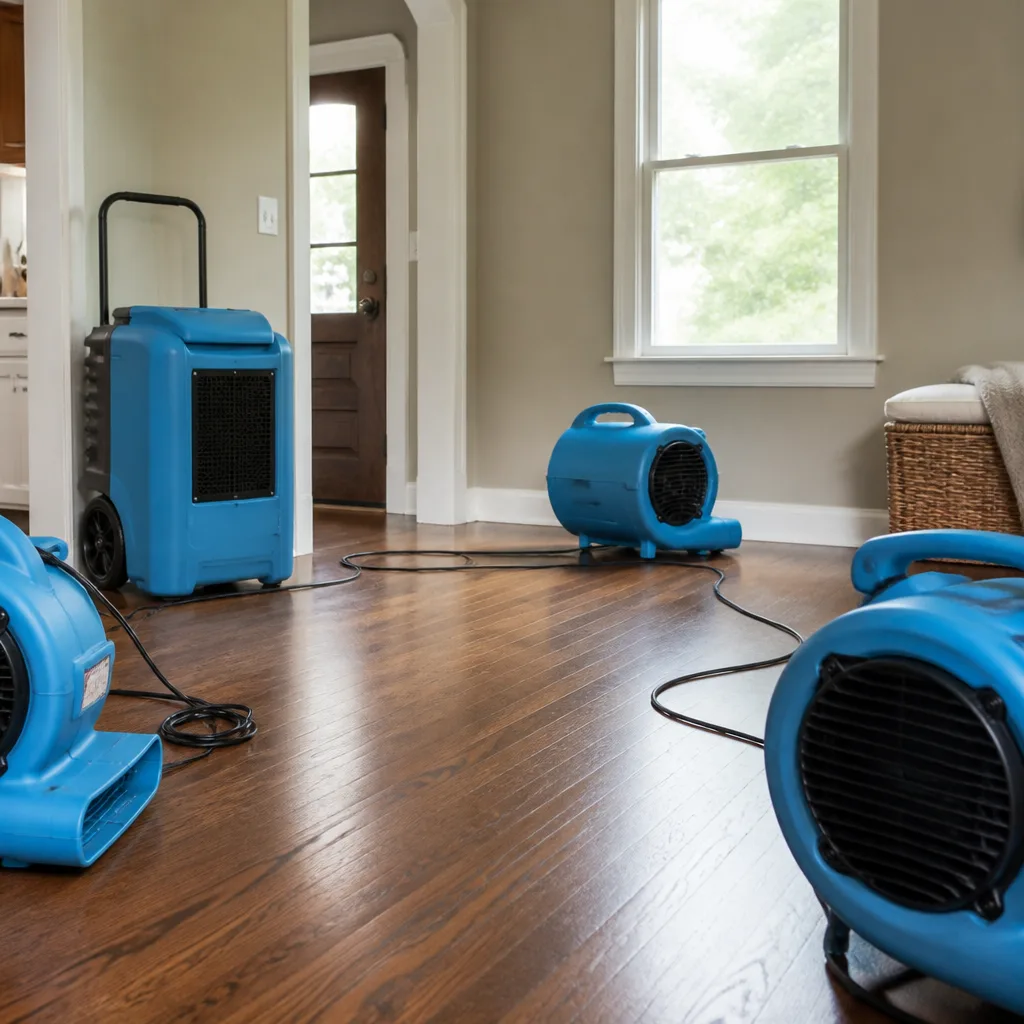
- EQUIP RENTAL (drying equipment rental): The per-day charge for dehumidifiers, air movers, and specialty drying equipment. This is the line item most commonly inflated. More on this below.
- ANTIMICROB (antimicrobial treatment): Application of EPA-registered antimicrobial to affected surfaces to prevent mold growth. Billed per square foot, typically $0.40 to $1.00 per square foot in Jacksonville.
- BASE R&R (baseboard remove and replace): Removal, disposal, and replacement of baseboards. Billed per linear foot, roughly $4 to $9 per linear foot including materials and paint.
- CARPET R&R (carpet remove and replace): Carpet and pad removal, disposal, and reinstallation. Jacksonville range: $3.50 to $8 per square foot depending on carpet quality.
The duplication typically happens in two places. First, the equipment line items, where the same dehumidifier gets billed on the drying line and the equipment rental line. Second, labor codes, where the same hours get attributed to extraction, structural drying, and content manipulation simultaneously. If you see three labor line items that total more hours than the crew was actually on site, the estimate is padded.
Ask the contractor to walk you through every code. A straight answer on each line item separates the crews that do the work from the ones that bill for work that never happened.
The Drying Equipment Formula: How Many Dehumidifiers Do You Actually Need?
The IICRC S500 standard, the reference for professional water damage restoration, gives contractors a clear formula for calculating drying equipment requirements. It starts with the affected square footage and works backward from the moisture load present in the materials. Here’s the practical math we use in Jacksonville:
- Determine affected square footage: Measure the actual wet area, not the room’s total footprint. If 200 square feet of a 400-square-foot living room is wet, you’re calculating for 200 square feet.
- Determine the drying goal: A standard LGR (low grain refrigerant) dehumidifier removes roughly 8 to 16 pints per hour depending on the model. The S500 standard works in AHAM pints per day, which translates to roughly one LGR dehumidifier per 400 to 700 square feet of affected area under normal conditions.
- Factor in air movers: One air mover per 10-14 linear feet of wet wall, directed at the affected surface. A standard 12×14 room with four wet walls needs roughly 4 to 6 air movers, not 12.
- Adjust for Class 4 (deeply saturated) conditions: If the water penetrated hardwood flooring, plaster, or concrete, the formula shifts higher, and you might need one LGR per 250 to 400 square feet. But Class 4 is a specific designation that should be documented with moisture readings, not assumed.
- The adjuster writes an initial estimate: This often happens on the first or second visit, sometimes before walls are opened. Missing water inside wall cavities, subfloor saturation, or hidden structural damage doesn’t appear because the adjuster couldn’t see it.
- The contractor writes a supplemental estimate: Once demolition begins and hidden damage is exposed, the contractor documents the additional scope and submits a supplement. This is where the two numbers diverge, and it’s a legitimate divergence when the contractor is documenting actual field conditions.
- The negotiation happens between adjuster and contractor: The homeowner is usually not in the room for this conversation. The contractor negotiates the supplement, and the homeowner sees the result only when the final payment is processed.
- The bad version: A contractor inflates the initial estimate, assumes the adjuster will negotiate down, and pockets the difference between the inflated number and what the work actually cost. The homeowner’s policy limit gets exhausted, and the actual restoration work may be substandard because the profitable line items were the ones that didn’t involve doing the work.
- The good version: A contractor documents the actual scope with photos, moisture readings, and written notes, submits a supplement that reflects what was actually found, and the negotiation produces a number that covers the real work.
- Humidity-driven drying time: Average outdoor relative humidity in Jacksonville runs 70-80% for most of the year. An LGR dehumidifier working against that ambient load takes longer to reach the drying target than the same unit in a drier climate. Legitimate estimates should account for 4-7 drying days in summer, not the 3-day standard used in drier markets.
- Older housing stock in core neighborhoods: Homes in Riverside, Avondale, San Marco, and Springfield often have plaster walls, wood lath, and original hardwood floors that require different drying protocols than modern drywall-and-carpet construction. Plaster holds more water and dries slower; hardwood floors may require specialty drying mats, which adds equipment cost per square foot.
- Flood zone awareness: Much of Jacksonville sits in flood-prone areas along the St. Johns River and its tributaries. Water from river flooding, storm surge, or drainage backup is Category 3 by definition, and the estimate should reflect containment, antimicrobial treatment, and disposal costs that a simple supply-line break wouldn’t require.
- A defined scope of work: Specific tasks, not general categories. “Extract water from living room, remove carpet and pad, remove drywall to 24 inches above water line in living room and hallway” is a scope. “Water mitigation as needed” is not.
- A line-item price for each task: The total price should be traceable to specific line items with specific quantities. A single lump sum with no breakdown is unenforceable in a dispute.
- The equipment list: Number of dehumidifiers, air movers, and specialty drying equipment, with the daily billing rate for each. This is the line item we discussed earlier, and it should be in writing before equipment ever arrives.
- The anticipated drying period: A target number of days with a defined process for extending the timeline. If drying takes longer than anticipated, the contract should specify how that gets communicated and approved.
- The change order process: A defined mechanism for handling discovered conditions. Any additional work should require a written change order signed by the homeowner before the additional work begins. No signed change order, no additional charge.
- The guarantee terms: Specifically what is covered, for how long, and what happens if the work fails. Our 365-Day Done Right Promise specifies exactly this: if a repair fails within one year, we return and make it right at no charge.
- Insurance documentation process: A commitment to provide photos, moisture readings, and written documentation formatted to support your insurance claim. If the contractor won’t commit to this in writing, you’re on your own with the adjuster.
Here’s the check we recommend every Jacksonville homeowner run before signing anything: take the affected square footage from the estimate, divide it by 500. That’s the approximate number of LGR dehumidifiers the S500 formula calls for in a standard Class 2 or Class 3 water loss. If the estimate shows 800 square feet of affected area and 6 dehumidifiers, someone is padding the equipment list by roughly double.
Air mover counts work on a similar logic. Take the total linear feet of wet wall, divide by 12. That’s your reasonable air mover count. A 10×12 room with 44 linear feet of wet wall should have roughly 4 air movers. Not 10.
Every legitimately needed dehumidifier runs from a professional-grade roster, the same brands we use on our Jacksonville jobs: Dri-Eaz, Phoenix, and Injectidry. Those units cost roughly $65 to $120 per day to rent on a billing basis. At $100 per day, an extra 4 dehumidifiers over 5 drying days is $2,000 in billing for equipment that was never needed. That’s the single most common overbilling pattern in Jacksonville, and it is almost invisible to a homeowner who doesn’t know the formula.
Adjuster Estimates vs. Contractor Estimates: Why the Gap Exists and How It Gets Negotiated
Your insurance adjuster and your restoration contractor are both looking at the same damaged room, but they’re building numbers from different instructions. The adjuster’s estimate is built to cover the minimum scope that restores the property to its pre-loss condition. The contractor’s estimate is built to cover the full cost of doing the work, including field conditions that the adjuster may not have seen.
That gap between the two numbers doesn’t automatically resolve in the homeowner’s favor. Here’s how it actually works in Jacksonville:
This is why photo documentation matters. Every Jacksonville estimate we produce is supported by photos taken before, during, and after the work, formatted to support your insurance claim. When the adjuster questions a line item, we can show exactly what we found behind the drywall. The estimate isn’t a position. It’s a record.
Why a Written Price Before Work Starts Is the Only Mechanism That Protects You
Scope creep in restoration happens one line item at a time. The initial quote covers extraction and drying. Then the contractor discovers “additional moisture” in a wall cavity. Then the drying is “taking longer than expected.” Then the antimicrobial treatment turns out to need “a second application.” Each change sounds reasonable in isolation. Stacked together, a $4,000 job becomes $9,000 before anyone writes a single new number down.
The only mechanism that prevents this is a written price delivered before any work starts, with a defined scope and a defined process for handling changes. In 2026, Jacksonville contractors who resist this are the ones who benefit from vagueness. We don’t work that way.
Every job at Keegan Restoration Jacksonville runs to The Garrison Standard: the price is put in writing before any work begins, technicians are background-checked and arrive in uniform, and every repair is backed by the 365-Day Done Right Promise, a written one-year guarantee with a free return visit if the work fails. That standard is named in every estimate we produce, and it applies to every phase of the work.
There is no version of this where a verbal number gets better. If the contractor won’t write it down, the number doesn’t exist.
Jacksonville-Specific Factors: Climate, Code, and Market Realities That Move the Number
Jacksonville’s coastal humidity is not a minor variable in restoration pricing. It’s the reason drying equipment runs longer here than in Atlanta or Charlotte, and it’s the reason the equipment billing problem we described earlier is so prevalent. A humid subtropical climate means ambient moisture levels stay high year-round, and drying a structure to the target moisture content takes more dehumidification capacity and more days.
Three Jacksonville-specific factors show up in every legitimate estimate:
For mold-related concerns, the same climate factors apply. Jacksonville’s humidity creates conditions where mold can establish within 24-48 hours of water intrusion, which is why post-remediation moisture checks matter more here than in drier regions. Our Mold Remediation in Jacksonville page covers the process and what to expect.
What a Properly Structured Restoration Contract Must Include to Be Enforceable
A restoration contract is only useful if it contains enough specificity to be enforceable. In Jacksonville, where contractor disputes are common enough that the state maintains specific licensing requirements for restoration work, the contract is the only document that protects you when a scope dispute arises. For details on local requirements, see Damage Restoration Permits, Codes & Inspections in FL: What You Need to Know.
Here are the seven elements every properly structured restoration contract must include:
A contract missing any of these seven elements is a warning sign. It doesn’t mean the contractor is dishonest. It means the contractor hasn’t thought through what they’re committing to, and that uncertainty gets resolved at your expense when the scope grows.
Common Mistakes to Avoid
- Accepting a verbal estimate and hoping for the best. Verbal numbers move. Written numbers with defined scopes and change order processes do not. If the contractor won’t write it down before starting, find one who will.
- Not checking the equipment list against the formula. Take the affected square footage and divide by 500. That’s your approximate number of LGR dehumidifiers. If the list shows double that, question it before you sign.
- Paying a large deposit before any work is done. Legitimate restoration companies in Jacksonville work through insurance billing or collect payment after documented work phases. A contractor demanding 50% upfront with no defined scope is a red flag.
- Letting the contractor negotiate the supplement without your involvement. Ask for copies of every communication with your adjuster. You don’t need to be in the room, but you need to see the numbers both ways.
- Assuming the adjuster’s first estimate is the final number. Initial estimates miss hidden damage by design. A documented supplement is normal and appropriate. The problem is inflated supplements, not supplements themselves.
- Ignoring the water category on the estimate. Category 1 and Category 3 water require entirely different protocols and price levels. If the estimate doesn’t state the category, ask why.
- Choosing a contractor without a written guarantee. Restoration failures don’t always show up immediately. A contractor who won’t put a one-year written guarantee in place doesn’t expect the work to hold up.
See the difference
 Before
 After
After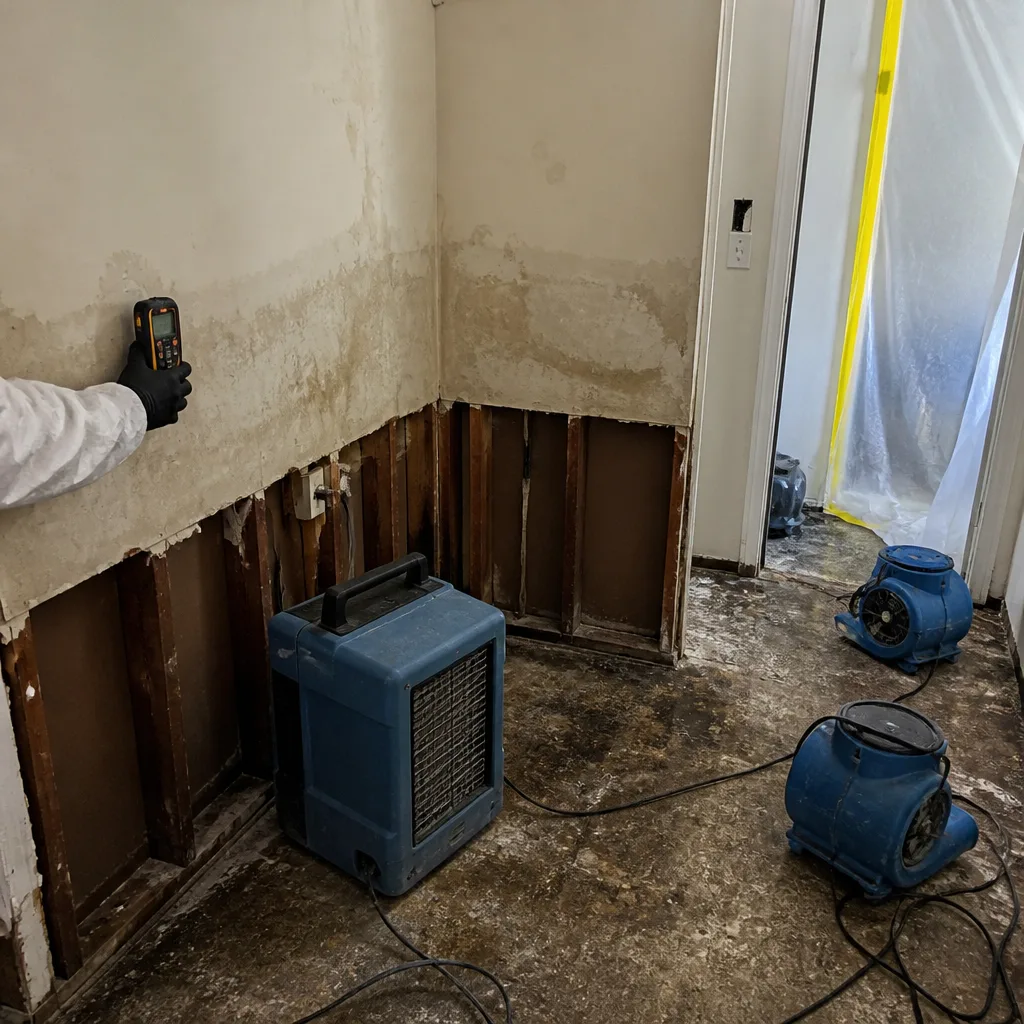 Before
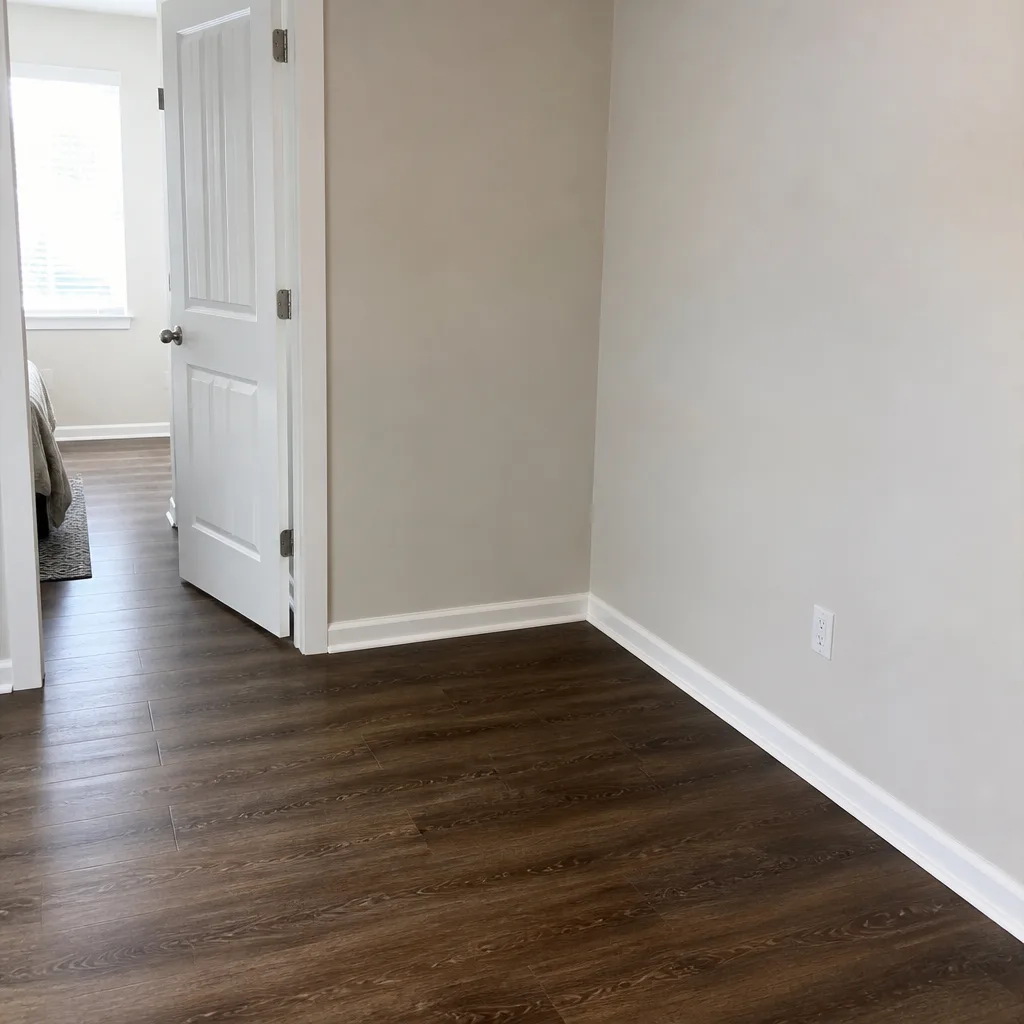 After
After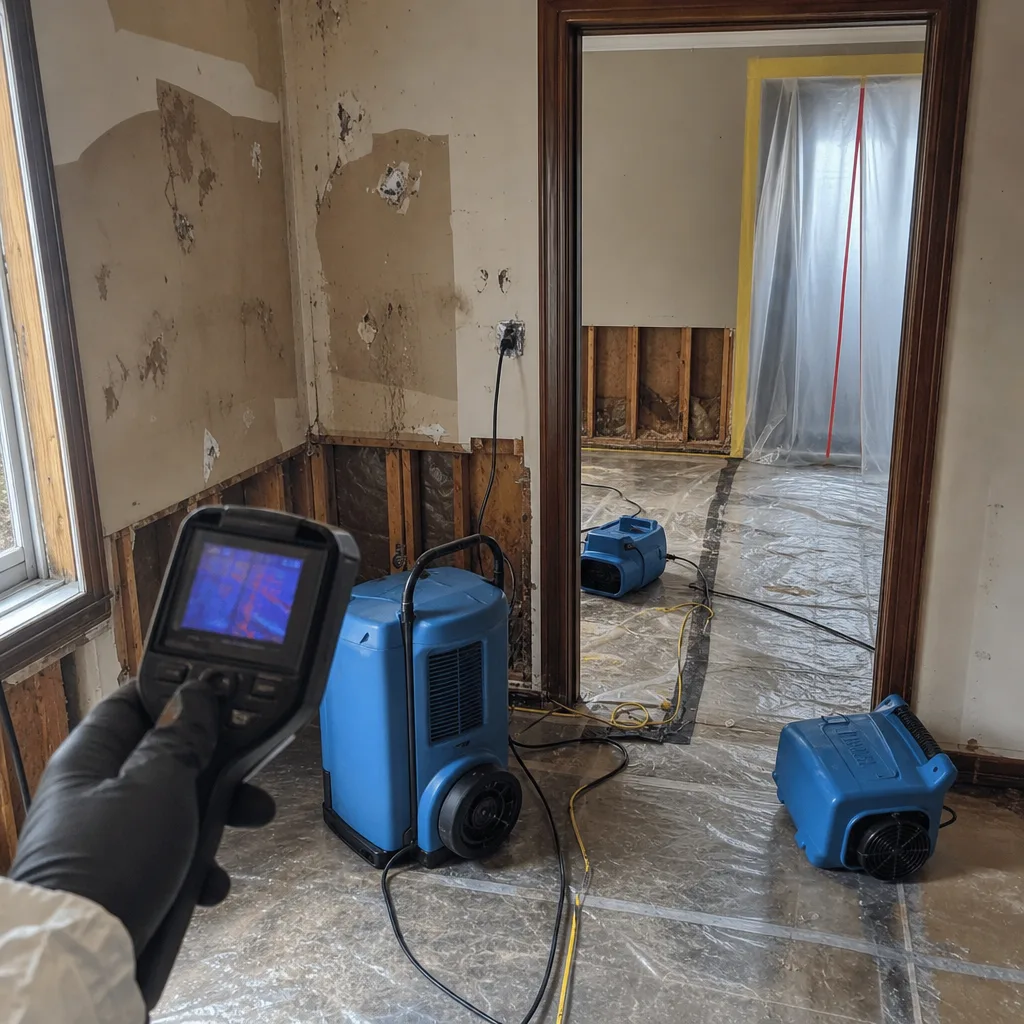 Before
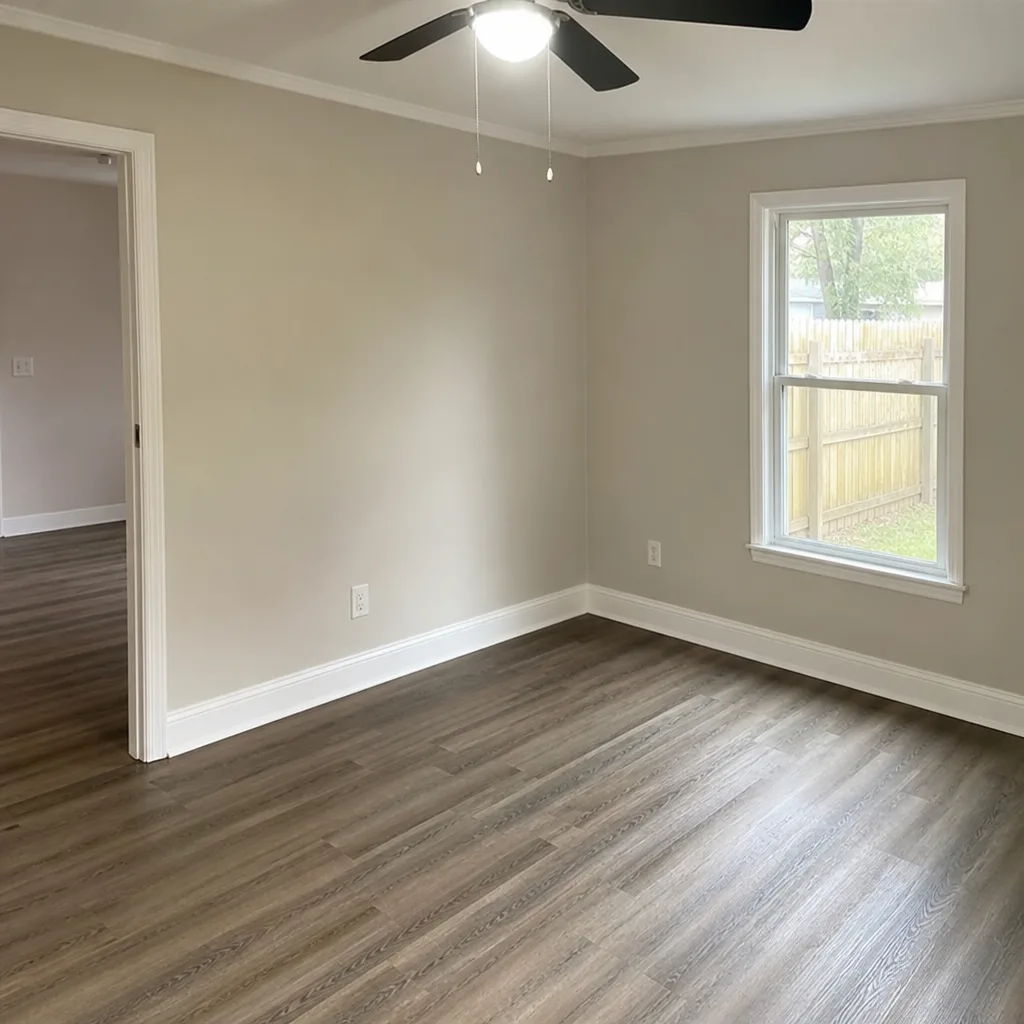 After
AfterWhen to Call a Professional
Call a restoration professional the moment you see standing water that extends beyond a single contained spill, any water that has been sitting for more than 24 hours, any water from a sewage source, or any fire damage that involves structural materials or smoke penetration beyond the room of origin. Jacksonville’s humidity means that mold establishment begins faster than you think, and the cost of waiting compounds daily. If water has touched drywall, baseboards, or flooring, you should have a professional assessment within hours, not days. Keegan Restoration Jacksonville offers free estimates throughout Jacksonville, and a live person answers the phone 24 hours a day, 7 days a week at (904) 664-5108.
Frequently Asked Questions
Water damage restoration in Jacksonville averages $2,500 to $18,000 depending on the water category, affected square footage, and drying time required. A contained Category 1 supply-line break in a single room typically runs $2,500 to $5,500, while a Category 3 sewage event affecting multiple rooms can exceed $25,000. Call (904) 664-5108 for an exact quote based on your specific situation, and we’ll put the price in writing before any work starts.
Most homeowners policies in Jacksonville cover sudden and accidental water damage from sources like supply-line breaks or appliance failures, while flood damage from rising water requires separate flood insurance. The key is documentation: photos, moisture readings, and written scope notes formatted to support your claim. We document every phase of every job specifically for insurance purposes, and we coordinate directly with your adjuster.
A Keegan Restoration Jacksonville crew can typically be on site within hours of your call, not days. A live person answers our phone 24 hours a day, 7 days a week, including holidays, and we run crews from our Jacksonville location, not a regional dispatch center. When water is actively damaging your home, speed matters more than anything else on this page.
If the affected area is smaller than a bath mat and the water was clean, you can probably dry it with a fan. Once water has soaked into drywall, baseboards, or flooring, professional drying equipment and moisture monitoring are necessary to prevent mold growth in Jacksonville’s humid climate. The water you can’t see is the water that causes the most expensive damage.
Mold remediation in Jacksonville typically runs $1,800 to $7,500 per affected area, with the price driven by containment requirements, the extent of the mold growth, and whether the source of moisture has been identified and corrected. Any quote below $1,800 for a documented mold problem should be examined carefully for what’s being left out.
On every Keegan Restoration Jacksonville job, we coordinate directly with your adjuster, providing the documentation, photos, moisture readings, and line-item scope notes the adjuster needs to process your claim. You stay informed at every step, but you don’t carry the weight of the negotiation. That’s part of The Garrison Standard, and it’s in writing on every estimate.
For a complete picture of how we handle restoration from the first call to the final walkthrough, start at the Keegan Restoration Jacksonville home page.
The Bottom Line
Restoration estimates in Jacksonville vary by a factor of ten for jobs that look identical because the variation is in the line items, not the work. Equipment billing is the most common inflation point, and the formula to check it is straightforward: affected square footage divided by 500 equals the approximate number of LGR dehumidifiers the IICRC S500 standard calls for. A written price before work starts, with a defined scope and a change order process, is the only protection that actually works. When the estimate is specific, the equipment list matches the formula, and the contract includes a written guarantee, you’ve found a contractor who wants to be measured against a standard. Every job at Keegan Restoration Jacksonville runs that way, and we’ve been doing it since 2005. Explore more guides & resources on protecting your home.
Written by Shane Pruitt, Owner at Keegan Restoration Jacksonville, serving Jacksonville since 2005.