
Last updated October 16, 2026
 Water damage drying
 Fire & smoke cleanup
 Mold remediation
 Storm response
 Sewage cleanup
 Reconstruction
Free visual inspection and a written scope of work before any mitigation begins - photos, moisture readings, and drying logs go in your claim file
The scope we write is the scope we bill. Anything new gets shown to you, in writing, before we touch it.
Get your free estimateSeasonal Damage Restoration Care for Jacksonville: Year-Round Homeowner’s Guide
Jacksonville’s “dry season” from November through April still delivers over 40 inches of rainfall in an average year. That means the national advice you see every fall, the stuff about winterizing pipes and raking gutters before the first frost, addresses maybe a third of the actual risk a Jacksonville homeowner faces during those months. This guide reorganizes home maintenance around the climate we actually live in: a long hurricane season, a wet winter that surprises people with freeze events, a hot and humid recovery period where mold moves fast, and a dry season that brings its own set of fire risks. You’ll learn what to inspect, when to do it, what to document, and which problems genuinely need a restoration crew versus a Saturday afternoon and a trip to the hardware store.
Restoration work we handle
Quick Answer
Jacksonville homeowners need a seasonal maintenance rhythm built around two high-risk windows: hurricane season from June through November and the brief freeze window in January and February. The wet months demand drainage, roof, and moisture inspections documented for insurance, while the dry months require fire-risk maintenance like dryer vent cleaning and HVAC servicing. The single most valuable habit is documentation: photos, measurements, and dated receipts filed away before anything goes wrong.
Table of Contents
- Jacksonville’s Real Seasonal Calendar: Two High-Risk Windows, Not Four Seasons
- The Pre-June Hurricane Preparation Sequence
- Post-Storm Recovery: The First 72 Hours That Decide Your Insurance Claim
- The January-February Freeze Window: What Actually Freezes in a Jacksonville Slab Home
- Dry-Season Fire Risk: Westside and Rural Fringe Maintenance That Prevents Disaster
- Documentation That Supports a Claim: Photos, Measurements, and Dates
- Mold Prevention Through Jacksonville’s Humidity Calendar
- Common Mistakes to Avoid
- When to Call a Professional
- Frequently Asked Questions
- The Bottom Line
Jacksonville’s Real Seasonal Calendar: Two High-Risk Windows, Not Four Seasons
We work in this climate year-round, and the damage calls we get do not follow a spring-summer-fall-winter pattern. They cluster. June through November is the wet window: tropical storms, afternoon thunderstorms that dump three inches in an hour, and the kind of humidity that keeps a damp drywall cavity wet for weeks. January and February are the freeze window: one or two nights in the low 20s, enough to split a copper pipe in an uninsulated crawl space or an exterior wall. Everything else is maintenance runway, the months where prevention actually happens.
If you’re doing a generic four-season checklist, you’re prepping for a climate you don’t live in. The homeowner in Mandarin needs a different October than the homeowner in Riverside, and neither needs what a Minnesota checklist tells them to do. Here’s how we think about the Jacksonville year:
- November through May: Dry-season maintenance window. Fire risk work, drainage grading, HVAC servicing, and the documentation backlog you should be building.
- Late May to early June: Hurricane preparation crunch. Roof inspection, gutter clearing, sump pump testing, and the pre-storm photo set.
- June through November: Active storm season. Post-storm response protocols, rapid drying, and secondary moisture prevention.
- Late December to February: Freeze watch. Pipe protection in slab homes, exterior hose bibs, and crawl space venting.
The Pre-June Hurricane Preparation Sequence
The most common mistake we see in Jacksonville is waiting until a named storm is three days out to think about a roof inspection. By then, every reputable contractor in Duval County is booked, and you’re left with whoever answers the phone. The preparation sequence below should be done before June 1, when the Atlantic season officially starts. Give yourself a month, and you’ll finish it over two weekends.
- Roof inspection and repair (complete by May 15). Look for lifted shingles, cracked flashing around vents and chimneys, and any soft spots visible from the attic side. Pay attention to roof valleys and any spot where two roof planes meet. A roof that leaks during a tropical storm is the single most common source of major interior water damage we respond to in Jacksonville.
- Gutter and downspout clearing (complete by May 20). Clogged gutters cause water to pour over the fascia and down exterior walls. That water finds its way into soffits, behind siding, and into wall cavities. Extend downspout discharges at least six feet from the foundation.
- Exterior grade check (complete by May 25). Walk around your house during an afternoon thunderstorm. Water should sheet away from the foundation on all four sides. If it ponds within six feet of the slab, you need a grading fix before the season starts.
- Sump pump and drainage test (complete by May 25). If you have a sump pump, dump a five-gallon bucket of water into the pit and watch it cycle. If it doesn’t, get it serviced. If you don’t have a sump pump but your neighborhood floods during routine storms, call a foundation drainage specialist for an assessment.
- Documentation photo set (complete by May 31). Take dated, timestamped photos of every interior room, the roof from the ground, the exterior walls, the water heater, the HVAC condensate drain, and any crawl space access. If a claim happens, these become your “before” evidence. More on this in the documentation section below.
Shane Pruitt tells every customer the same thing: the photos you take on a sunny day in May are worth ten times the photos you take at 2 a.m. during a storm. You cannot recreate damage-free baseline photos after the water is already in the house.
Post-Storm Recovery: The First 72 Hours That Decide Your Insurance Claim
The first 72 hours after water enters a Jacksonville home are when permanent damage happens or gets prevented. In this heat, mold and mildew begin colonizing wet drywall and carpet pad within 48 to 72 hours. What you do before the restoration crew arrives, or before you decide whether you even need one, determines whether a Category 1 water event becomes a Category 3 contaminated mess.
Here’s the sequence we recommend, in order:
- Document everything before you touch anything. Walk the affected area and take video. Narrate what you see. Open cabinets, look behind furniture, check the baseboards. This is your claim file.
- Stop the source. If water is still entering from a roof leak, a broken pipe, or a storm surge breach, shut off the water at the main if it’s plumbing, or tarp the roof penetration if it’s a leak. You’re preventing the damage from getting worse, which your insurance policy requires.
- Call your insurance carrier. Report the loss and get a claim number. Ask them to confirm in writing whether they cover emergency mitigation, and ask for a list of approved restoration vendors. You are not required to use their vendor; you have the right to choose your own restoration company in Florida.
- Extract standing water. If you have a wet/dry vacuum and the water is clean (from a pipe, not a sewer or storm surge), start pulling it out. The longer water sits, the more it wicks up drywall and into subflooring.
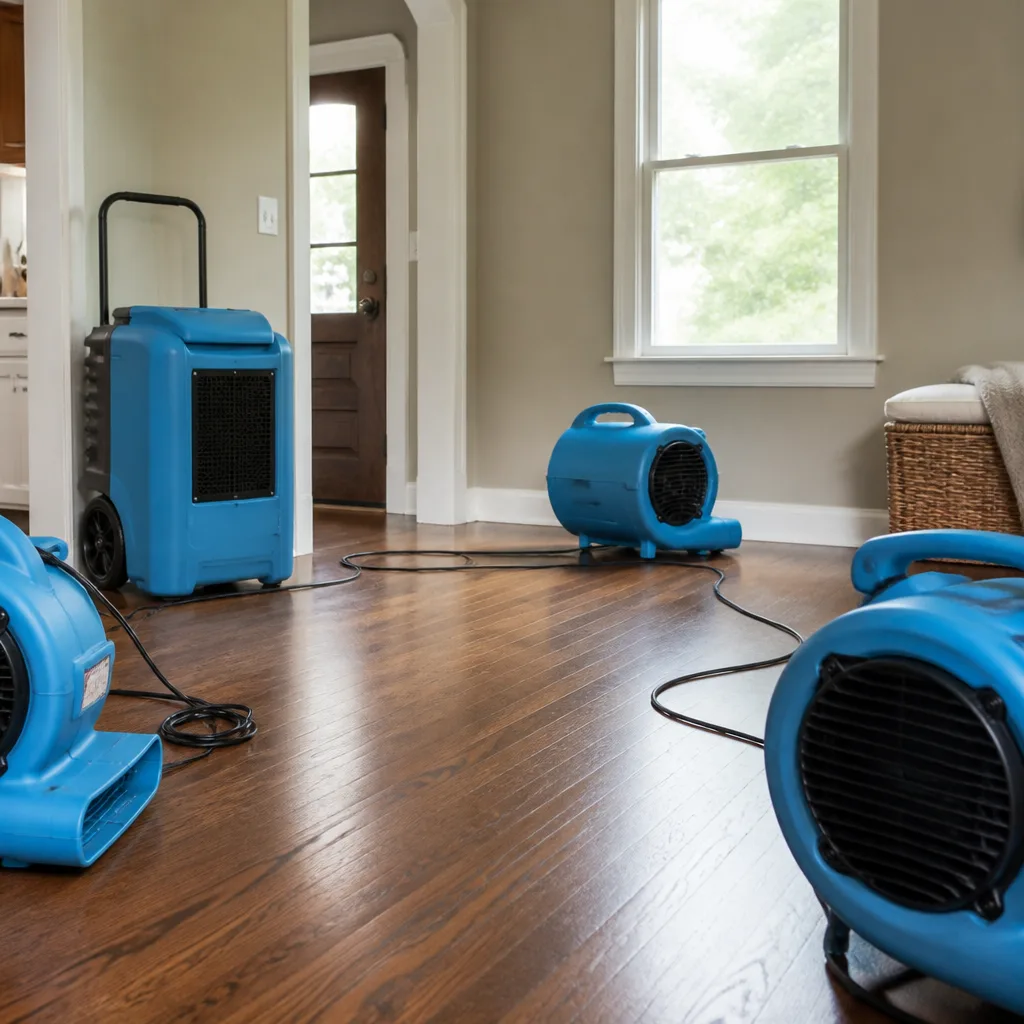
- Get air moving and dehumidification running. Every hour you wait in Florida humidity adds moisture load. A professional restoration company with desiccant or low-grain refrigerant drying equipment can pull a house dry in 3 to 5 days. A homeowner with a box fan and a dehumidifier from a hardware store might take two weeks, and in that window, mold takes hold.
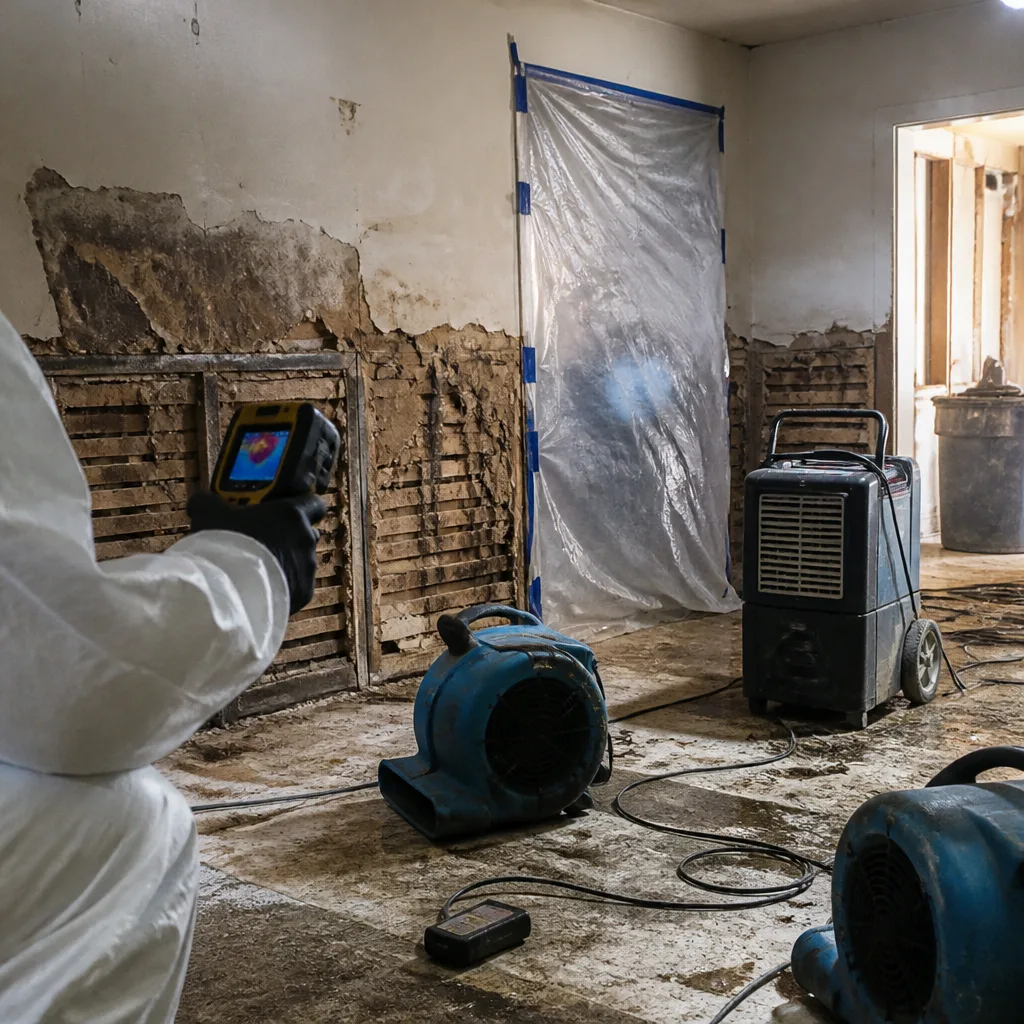
- Have a professional moisture assessment done. Water hides. It travels under baseboards, into wall cavities, under vinyl plank flooring. A restoration crew using moisture meters and thermal imaging can map the actual water migration path. What you can see is usually a fraction of what’s wet.
One thing worth stating plainly: in Jacksonville’s post-storm heat, you are not racing against inconvenience. You are racing against mold. A Category 1 water loss that’s extracted and dried within 72 hours rarely becomes a mold problem. The same loss left wet for a week in August becomes a Mold Remediation in Jacksonville job.
The January-February Freeze Window: What Actually Freezes in a Jacksonville Slab Home
Jacksonville gets one or two hard freezes per winter, usually in January. Most homes here are built on concrete slabs, which means the pipes are not in a basement; they’re either in the slab itself, in an attic, or in an exterior wall cavity. That changes where freezes do their damage, and most national winterization advice does not account for it.
The most vulnerable pipe locations in a Jacksonville slab home:
- Exterior hose bibs and irrigation backflow preventers. These are the first to freeze. Disconnect hoses before the first freeze forecast. Install insulated covers on hose bibs.
- Attic water lines for water heaters and bathroom supply lines. Attic temperatures drop fast on a clear, windy night. Pipes lying against roof sheathing freeze quicker than anything inside the living space. Pipe insulation is cheap and easy to install yourself.
- Kitchen and bath supply lines in exterior walls. Under-sink cabinets on exterior walls trap cold air. On freeze nights, open cabinet doors to let conditioned air circulate.
- CPVC supply lines in garages and crawl spaces. CPVC gets brittle with age and is more prone to splitting under freeze stress. If you have exposed CPVC in an unheated garage, wrap it or consider replacing it.
During a freeze forecast, drip one faucet on the farthest run from your water main, leave cabinet doors open, and disconnect all exterior hoses. A pipe that freezes and splits does not leak until it thaws, so the damage usually shows up 24 to 48 hours after the cold wave passes. That’s why our freeze-related calls in Jacksonville spike two days after the temperature recovers. If you hear water running when no fixture is on, shut off at the street and call a plumber or a restoration company immediately.
Dry-Season Fire Risk: Westside and Rural Fringe Maintenance That Prevents Disaster
The dry season in Jacksonville, roughly November through April, is also the peak season for house fires caused by neglected maintenance. The Westside, Whitehouse, and the rural fringe around Baldwin and Maxville get the worst of it: longer grass, more vegetation against structures, and more reliance on wood-burning heat sources. The tasks below are not dramatic, but they are the difference between a manageable incident and a total loss.
- Defensible space clearing. Remove dead vegetation, pine needles, and leaf litter within 30 feet of the house. In areas like the back roads off Chaffee Road, ember ignition from brush fires is a real risk.
- Dryer vent cleaning. Clean the lint trap every load, and have the full vent line cleaned annually. Lint buildup inside the vent is one of the top causes of house fires in the US, and Jacksonville’s high laundry frequency during humid months makes it worse.
- HVAC cleaning and filter replacement. Change filters monthly during peak heating use. A dirty evaporator coil blocks airflow and causes the system to overheat the heat strips. Annual HVAC inspection catches this.
- Electrical panel and outlet inspection. Warm outlets, flickering lights, or breakers that trip repeatedly are warning signs. Loose connections in a panel are a fire cause that no amount of smoke alarm coverage can undo.
- Smoke and CO detector testing. Change batteries on a fixed date every year, not when the chirp starts. January 1 is the date we recommend marking on the calendar.
The fire risk in Jacksonville during dry months is real but manageable. Most of what causes house fires is neglect of a small, known problem. A Fire Damage Restoration in Jacksonville job usually starts with a story about a task someone meant to do last season.
Documentation That Supports a Claim: Photos, Measurements, and Dates
Insurance companies process claims based on evidence. The homeowner who files a water damage claim with a complete pre-loss photo file, a dated maintenance log, and post-damage photo and video documentation gets approved faster and with less pushback than the homeowner who files with a phone call and a description. That is not a comment on any particular carrier; it’s how claim adjusting works.
Here’s what a documentation system looks like in practice:
- Pre-loss photo set. Once per year, take wide shots of every room, the water heater, the HVAC unit, the roof from the ground, the breaker panel, and exterior walls. Save them to a dedicated folder in cloud storage with dates in the filenames.
- Maintenance log. Keep a simple spreadsheet or a paper log with the date, the task done, and who did it. “November 12, 2025: dryer vent cleaned, vent line inspected, no blockage found.” A maintenance log is evidence of due diligence.
- Post-damage documentation. The day of a water or fire event, take video before moving anything. Narrate what you see. Measure standing water depth if any. Photograph the source of the water or fire regardless of how minor it looks.
- Receipts for professional work. If a roofer repairs flashing or an HVAC tech replaces a component, keep the invoice. A claim adjuster will ask what you did to prevent the damage. Paperwork answers that question.
- Contractor documentation for restoration. A professional restoration company should give you a scope of loss: a written document itemizing what is damaged, what will be done, what it costs, and what equipment will be used. At Keegan, every job gets Keegan Restoration Jacksonville home documentation formatted to support an insurance claim: moisture maps, drying logs, and photo evidence shot throughout the job.
The insurance conversation goes better when you can hand the adjuster a file instead of a story. The documentation itself does not add anything to your premium, and it saves weeks of back-and-forth when a claim happens.
Mold Prevention Through Jacksonville’s Humidity Calendar
Mold in Jacksonville homes is not a seasonal problem; it’s a humidity problem that peaks at certain times. The worst mold conditions happen when high outdoor humidity meets a cool interior surface, causing condensation in places you don’t look: inside AC ducts, behind dressers on exterior walls, under carpet near sliding glass doors, and inside wall cavities after a slow leak.
The mold calendar for Jacksonville:
- March through May (the shoulder season): Days get warm, nights stay cool, and homeowners turn off the AC and open windows. Indoor humidity climbs. This is when we get calls about condensation on toilet tanks, musty closets, and mold starting on north-facing walls.
- June through September: AC runs constantly. The risk shifts to condensate drain clogs, drain pan overflows, and humidity inside ductwork. A clogged AC condensate line can leak water into a ceiling cavity for weeks before anyone notices.
- October through February: Cooler and drier. The mold from summer damage often shows its symptoms now: musty smell when the heat runs, visible colonization behind furniture, respiratory issues in the household.
Prevention comes down to three habits. Keep indoor relative humidity between 30 and 50 percent year-round. Inspect and clean your AC condensate drain line every spring. And investigate any musty smell immediately, even if you can’t see anything. A smell is the first symptom of mold, and it’s cheaper to address at the smell stage than after the drywall is opened. If you find visible mold growth larger than a couple square feet, it’s a Mold Remediation in Jacksonville situation, not a bleach-and-sponge situation.
Common Mistakes to Avoid
- Following a generic four-season checklist. Jacksonville doesn’t have four equal seasons. You’re prepping for hurricanes and brief freezes, not snow load and ice dams.
- Waiting for a storm to prep your documentation. If you’re taking “before” photos after the water is already in the house, you don’t have before photos. The annual photo set is a sunny-day task.
- Ignoring the AC condensate line. In Jacksonville, the AC runs hard for six months a year. A clogged condensate line is one of the most common sources of hidden ceiling water damage we see. Clean it every May.
- Turning off the AC and opening windows in spring. The humidity that makes a house feel “stuffy” in April is the same humidity that feeds mold in a closet. Keep the AC running or use a dehumidifier during the shoulder months.
- Treating mold as a cleaning problem instead of a moisture problem. Cleaning visible mold without fixing the moisture source is a paint job on rust. Find where the water is coming from, fix that first, then remediate.
- Assuming insurance doesn’t cover mold. Many Jacksonville policies cover mold remediation when the mold results from a covered water event. The documentation trail is what makes the difference between a covered claim and a denied one.
- Not knowing your restoration company’s scope process. You should know the written price before work starts, not after the crew has an armful of demolition tools in your house. Ask for the scope before you sign anything.
When to Call a Professional
Some of this guide covers DIY maintenance: clearing gutters, changing batteries, cleaning dryer vents, spraying out the AC condensate line. Those are homeowner tasks. But when water has entered the building envelope, when you smell gas after a fire, when you see mold that covers more than a small patch, or when the damage touches structural materials, call a professional before the problem spreads. Water Damage Restoration in Jacksonville means extraction, drying, and moisture mapping done right the first time, not a guess. Keegan Restoration Jacksonville offers free estimates in Jacksonville, and every job gets a written scope of loss before any work starts. Call (904) 664-5108 any hour; a live person answers.
Frequently Asked Questions
The most common water damage we respond to in Jacksonville is AC condensate line overflow, followed by plumbing leaks in slab foundations and storm-related roof leaks during hurricane season. Each has a different insurance profile, so photograph the source and the damage before calling.
Complete the roof inspection, gutter clearing, grade check, and documentation photo set before June 1. Give yourself a full month before the season starts so you’re not competing with every other homeowner in Duval County for contractor time. For a free roof and moisture assessment, call (904) 664-5108.
Most Florida homeowners policies cover mold remediation only when the mold resulted from a covered water event, and only if the homeowner acted promptly to mitigate the water damage. Document everything: pre-loss photos, the date you noticed the leak, and the steps you took. That file is what gets the claim approved.
Professional restoration companies in Jacksonville prioritize storm response and can typically reach your property within hours, not days. Keegan’s live-answer dispatch line runs 24/7, including weekends and holidays, so you’re not leaving voicemails while water spreads. Call (904) 664-5108 as soon as you detect water.
For anything beyond a small spill, professional drying equipment makes a real difference. High-volume air movers from brands like XPOWER and B-Air, plus commercial dehumidification units, can dry a wet room in 3 to 5 days. Box fans and a consumer dehumidifier take two weeks or more, and in Jacksonville’s heat, that’s enough time for mold to establish permanently in the wall cavity.
Pipes in Jacksonville homes freeze when the outside temperature drops to the low 20s for several hours, especially in uninsulated attic and crawl space locations. The freeze damage usually shows up a day or two after the thaw, when the split pipe starts leaking. Disconnect hoses and drip a far faucet on nights below 28 degrees.
The Bottom Line
Jacksonville homeowners need a seasonal maintenance rhythm that reflects the actual climate we live in. Prep for hurricane season before June 1, treat January freezes as a real risk even in a slab home, keep humidity controlled through the spring shoulder months, and maintain a documentation file that would convince an adjuster you did everything right. The cheapest restoration job is the one you prevent. The second cheapest is the one caught early with a moisture assessment, a written scope, and a professional crew. Fire Damage Restoration in Jacksonville, water extraction, or mold remediation all share the same rule: speed and documentation decide how bad it gets. Call (904) 664-5108 for a free estimate, any time, any season.
Written by Shane Pruitt, Owner at Keegan Restoration Jacksonville, serving Jacksonville since 2005.
See the difference
 Before
 After
After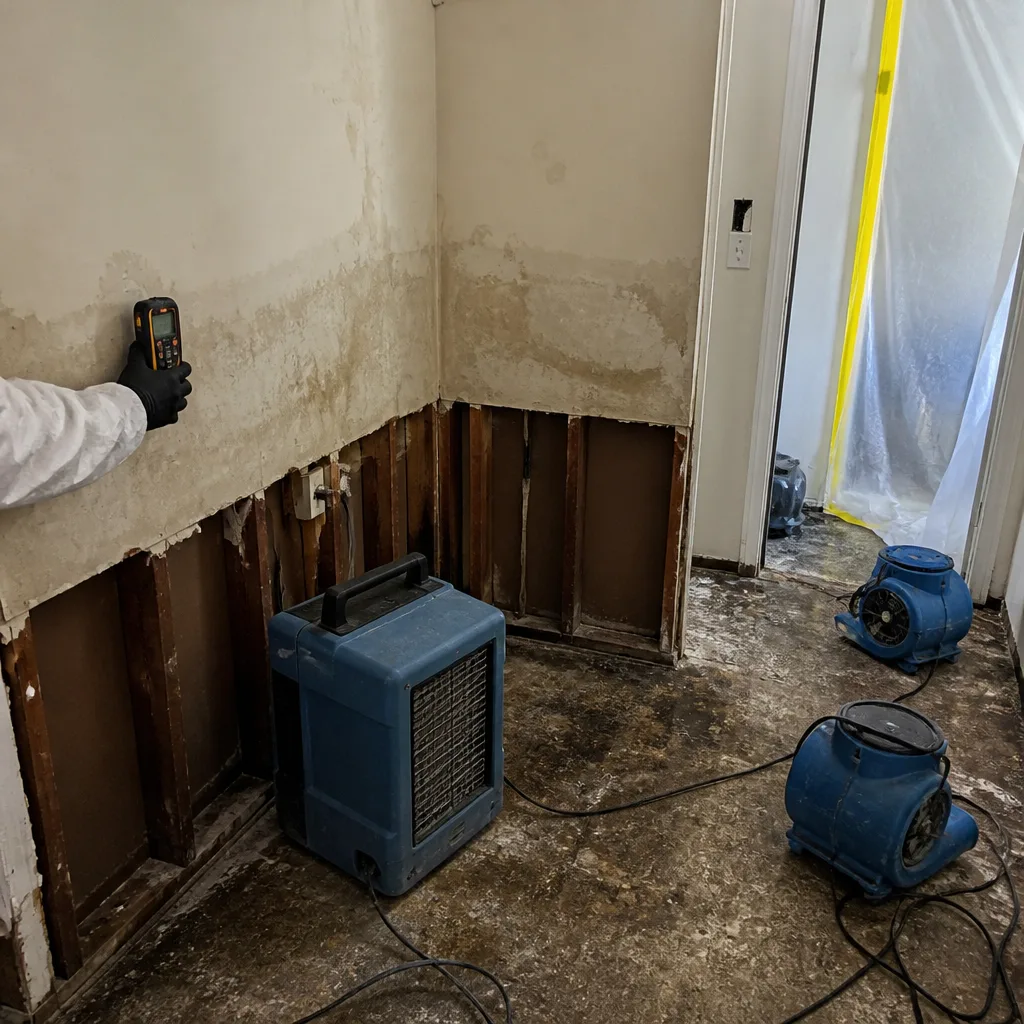 Before
 After
After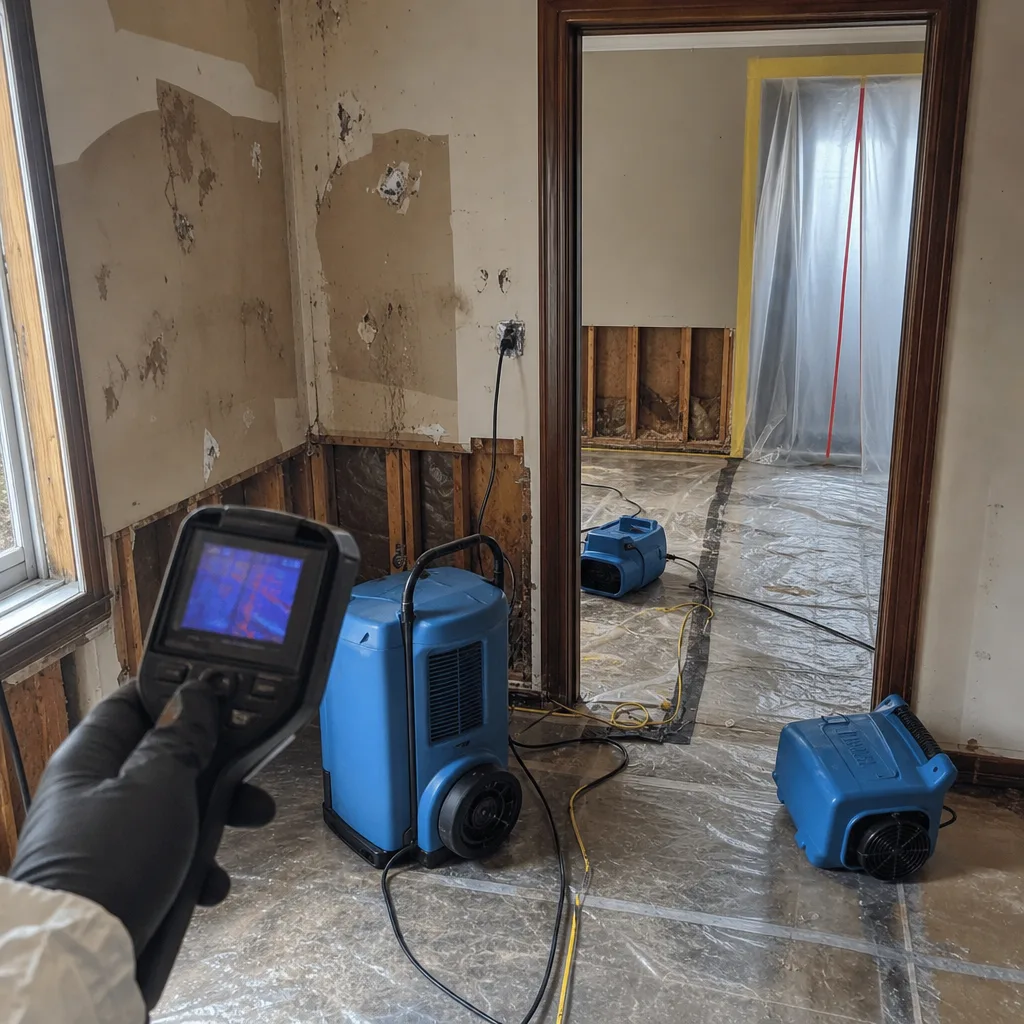 Before
 After
After