

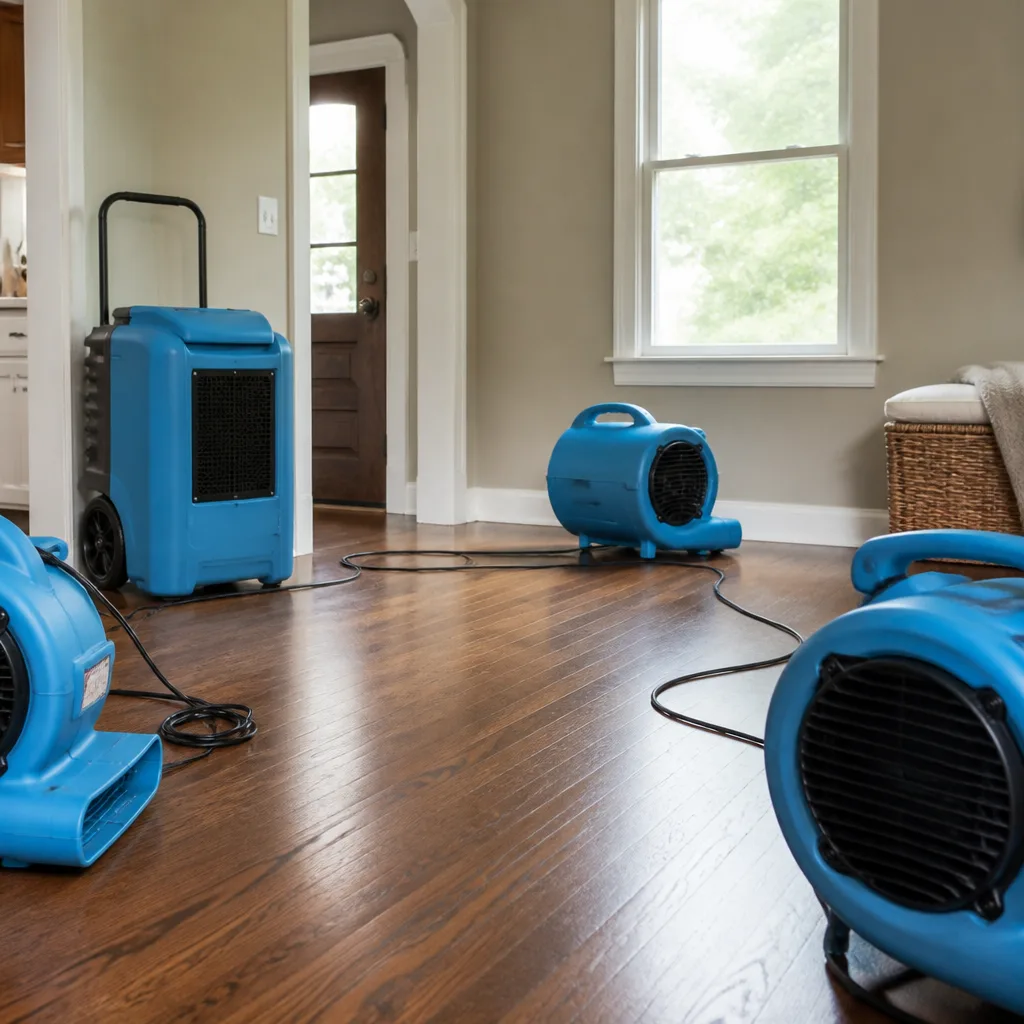
 Water damage drying
 Fire & smoke cleanup
 Mold remediation
 Storm response
 Sewage cleanup
 Reconstruction
Free visual inspection and a written scope of work before any mitigation begins - photos, moisture readings, and drying logs go in your claim file
The scope we write is the scope we bill. Anything new gets shown to you, in writing, before we touch it.
Get your free estimateRestoration work we handle
See the difference
 Before
 After
After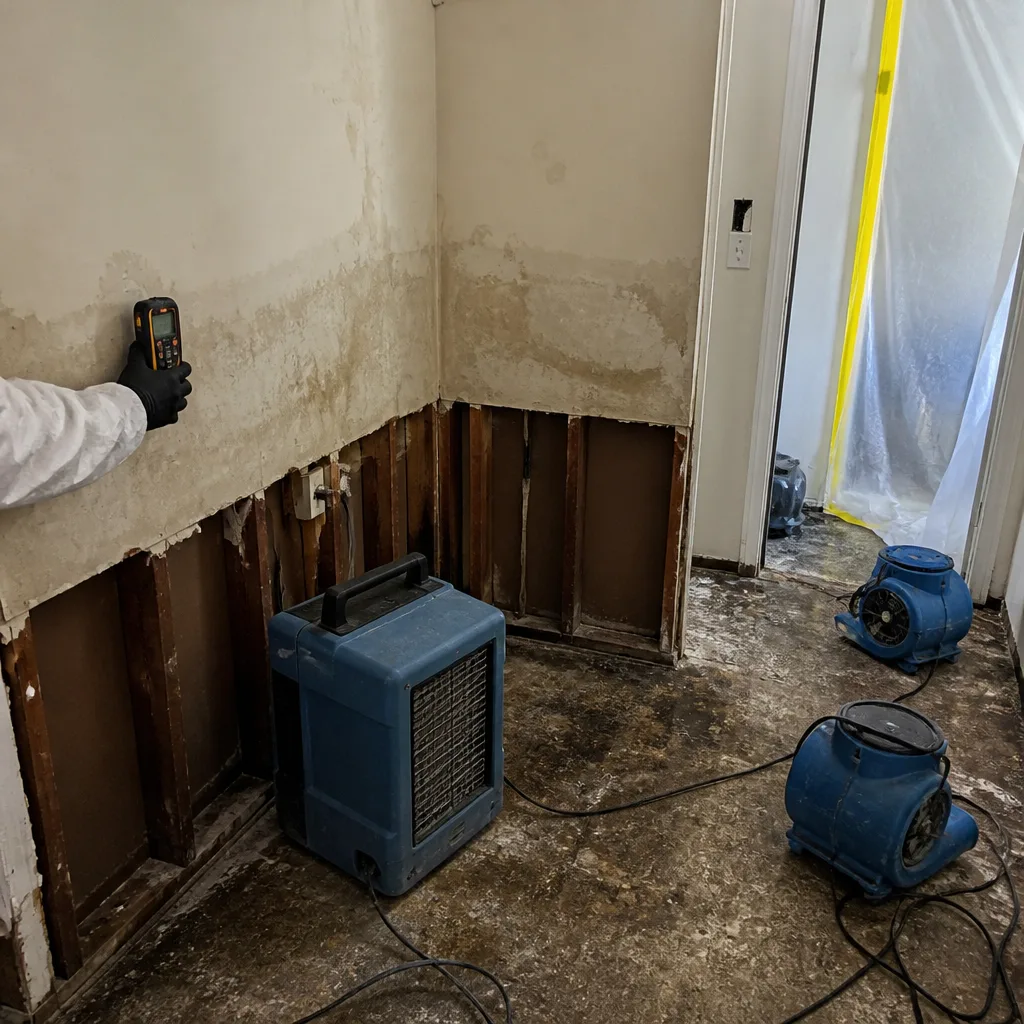 Before
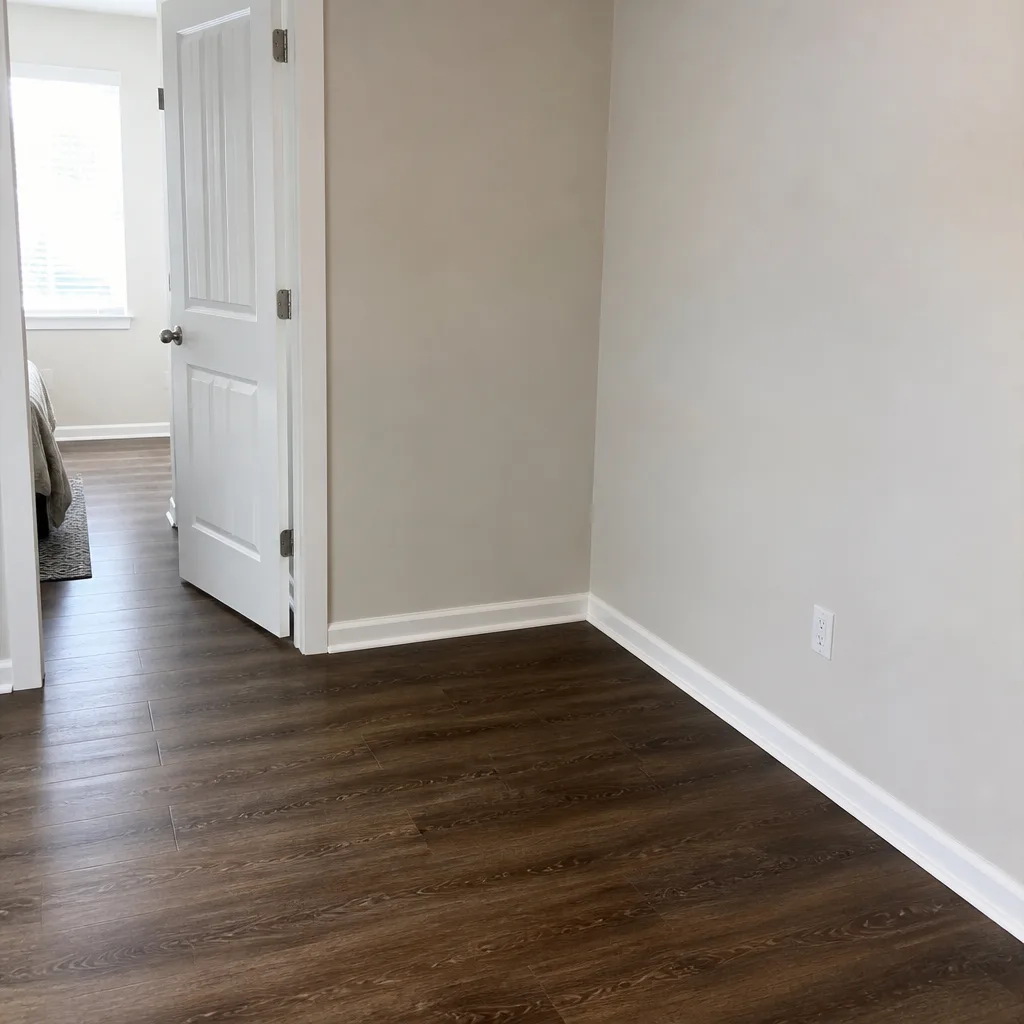 After
After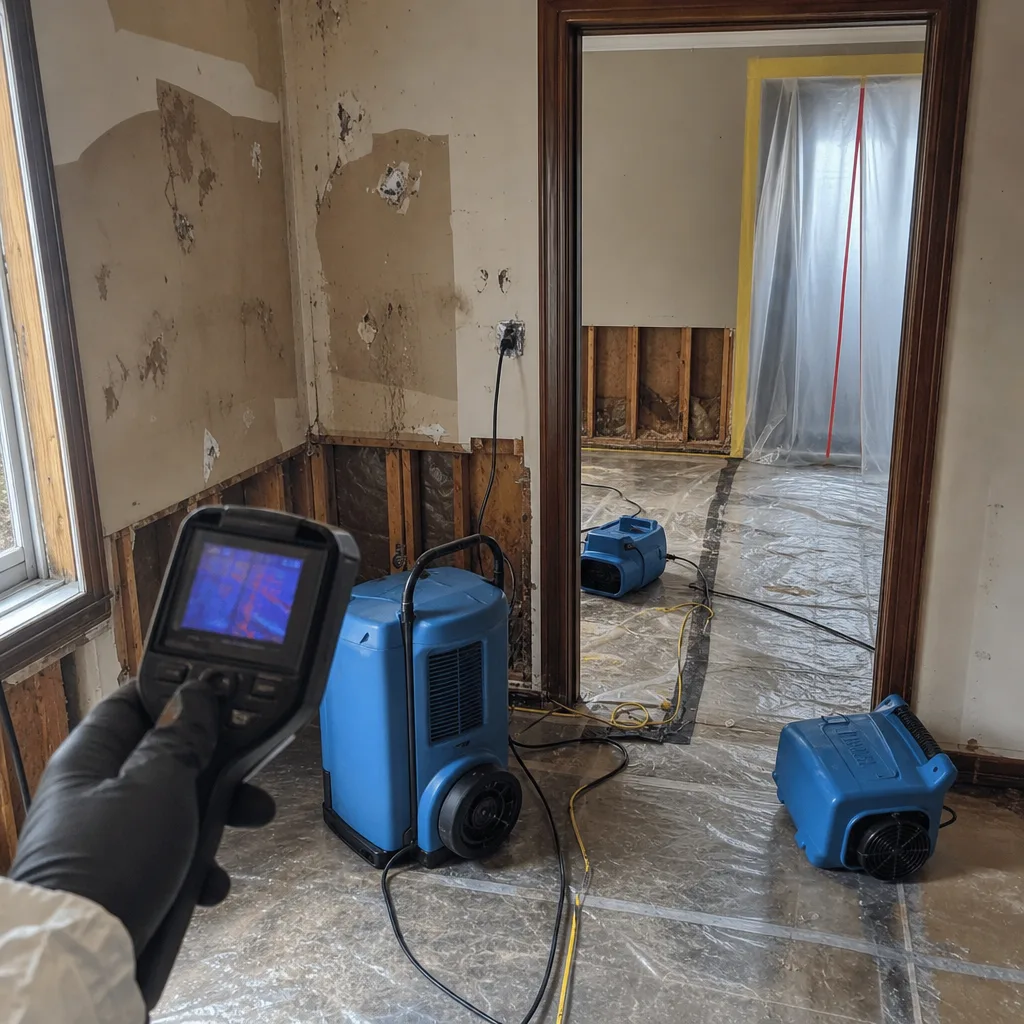 Before
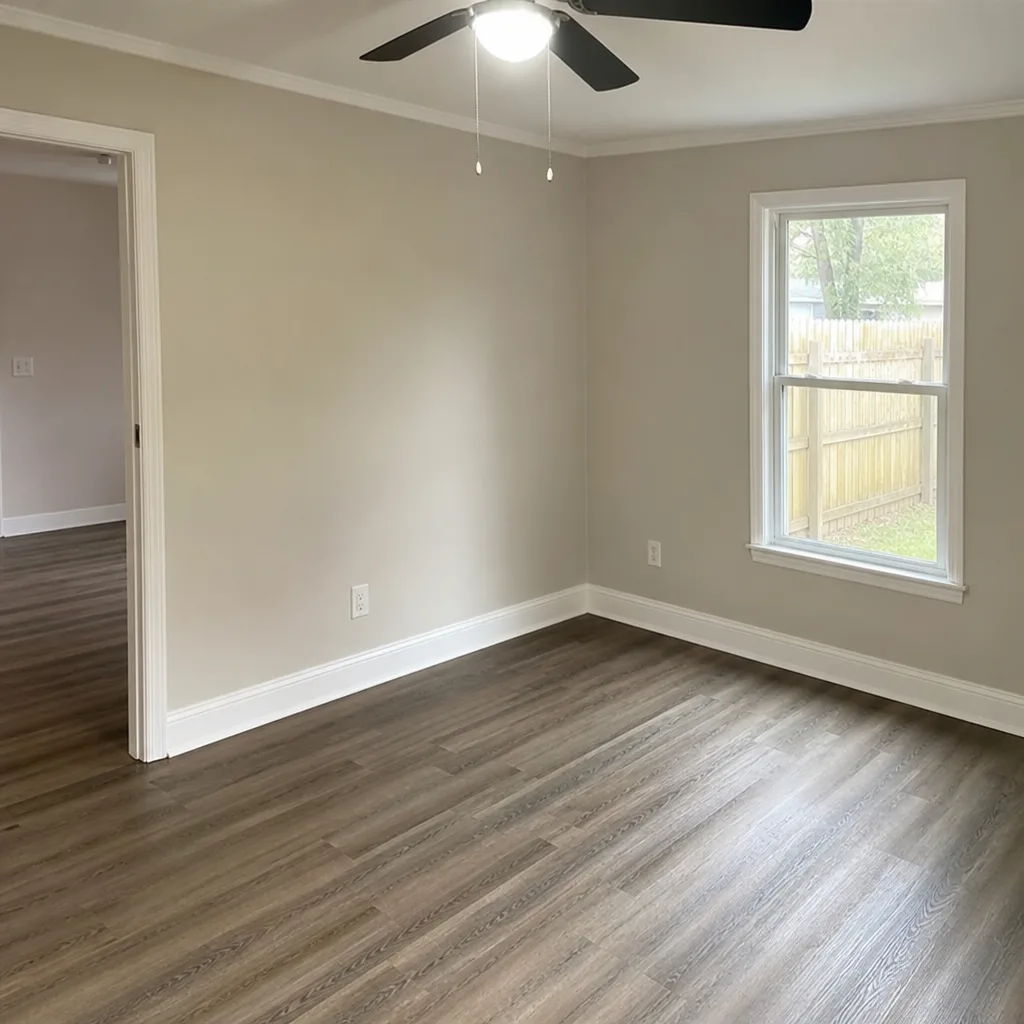 After
AfterHow Much Does Water Damage Restoration Cost in Jacksonville?
Water Damage Restoration services in Jacksonville, FL typically cost between $1,200 and $5,600 for most residential jobs in 2026, with an average of $3,400. Small, contained incidents like a supply-line leak under a bathroom sink run $450 to $1,200, while Class 3 water damage across multiple rooms with full structural drying can push $8,000 to $15,000. These are real numbers from the Jacksonville market, not national averages that blur South Florida and the Panhandle into one figure.
One thing to know before you call around: the first 48 hours are where the price gets set. Water sitting in drywall, baseboards, and subfloor wicks upward and spreads outward. A Category 1 clean-water leak that would have cost $800 to extract and dry today becomes a $3,000-plus mold and tear-out job by the weekend. That’s why live-answer phone service matters here. You’ll reach someone at (904) 664-5108 around the clock, not a voicemail box that gets checked Monday morning.
Key Takeaways
- Typical range: $1,200 to $5,600 for most single-family homes in Jacksonville and the Beaches.
- Per-square-foot cost: $3.50 to $7.50 for water extraction and drying; $8 to $18 for full repair and reconstruction.
- Same-day emergency callout: $150 to $350 trip and assessment fee, applied toward restoration if you proceed.
- Insurance: Most Jacksonville homeowner policies cover sudden, accidental water damage; gradual leaks are usually excluded.
- Free estimates: Keegan Restoration Jacksonville provides a written price before any work starts. Call (904) 664-5108.
Water Damage Restoration Cost Breakdown (2026)
Contractors in the Jacksonville market price water damage jobs by the line item: what equipment is needed, how many days it runs, how much material has to come out, and what goes back in. Here’s what we’re seeing across Duval, St. Johns, and Clay counties in 2026:
- Inspection and moisture mapping: $150 to $350 (often credited toward work). Includes thermal imaging and pin-type moisture-meter readings to define the scope of loss.
- Water extraction (Category 1, clean water): $3.50 to $5.50 per square foot. Truck-mounted extraction units pull several hundred gallons per hour.
- Water extraction (Category 2 – 3, gray/black): $5.50 to $8 per square foot. Higher cost reflects containment, PPE, and sanitizing agents.
- Structural drying: $800 to $3,500 per room, depending on equipment days. Includes air movers, dehumidifiers (desiccant or refrigerant), and monitoring visits.
- Drywall removal and replacement: $2.75 to $5 per square foot. Jacksonville’s humidity means drywall rarely dries in place without warping, so most two-foot flood cuts are standard practice.
- Baseboard and trim: $3 to $6 per linear foot removed and replaced, plus paint.
- Flooring removal: $2 to $4 per square foot for carpet and pad; $4 to $8 for glued-down engineered wood or tile demo.
- Anti-microbial treatment and HEPA cleanup: $0.75 to $2 per square foot.
- Dehumidification and monitoring (days 3 – 7): $150 to $350 per day. This is the part homeowners on tight budgets try to skip. Don’t. Damp drywall is how you end up with mold behind the baseboards in Mandarin or Riverside.
- Rebuild and finish work: $8 to $18 per square foot for full room restoration, varying by finish level.
What pushes a Jacksonville job toward the top end? A two-story home where the water traveled through the ceiling joists from an upstairs bathroom into the kitchen below. That’s extraction plus floor removal plus cavity drying plus open-ceiling drying. What pulls it down? A Burst Pipe Restoration situation like a burst washing machine hose caught within an hour, in a tile-floored laundry room with open access underneath the house. That’s often a $650 to $900 extraction-and-dry job if the room is contained.
The Cost Drivers Nobody Tells You About
- Category of water: Clean water from a supply line is the cheapest. Gray water (dishwasher, washing machine, sump) adds sanitizing steps. Black water (toilet backflow, river or storm surge intrusion) requires full PPE, containment, and sometimes a separate waste hauling permit. St. Johns River flooding and hurricane surge from the St. Johns or the Intracoastal always lands in the black-water category.
- Time elapsed: The longer water sits, the more square feet of porous material is wicking. A leak that ran overnight behind a kitchen cabinet in Ortega has already climbed the drywall into the wall cavity. That’s tear-out, not just drying.
- Class of water damage: IICRC Class 1 (minimal absorption) through Class 4 (deeply bound water in plaster, hardwood, concrete, and masonry). Class 4 jobs require specialty drying from brands like Injectidry that force air through floor systems and wall cavities under pressure.
- Dry-out access: Homes on slab foundations in Arlington or the Southside trap water between vinyl plank and concrete, requiring several extra days of desiccant or refrigerant drying. Pier-and-beam homes in San Marco and Riverside have crawlspace access that speeds air movement and cuts drying time.
- Finished vs. unfinished spaces: A garage or crawlspace incident is a simpler job because there’s no drywall, trim, paint, or flooring to restore. A finished bonus room over the garage with carpet pad means full demolition and rebuild.
What Affects Water Damage Restoration Pricing in Jacksonville
Jacksonville has a cost profile distinct from Miami, Tampa, or Orlando. Here’s what moves the number on your written estimate:
- Humidity and drying time: Jacksonville’s average relative humidity runs 70% to 78% year-round, with summer peaks above 90%. High ambient humidity slows evaporation and means our crews run more dehumidifier days to hit the dry standard (target moisture content of 8 – 12% for structural wood). In drier climates, three days of drying is common. In Jacksonville, four to seven is realistic. Each equipment day adds cost but skipping it fails the drying standard.
- Home construction style: Pre-1970s Jacksonville homes in Riverside, Avondale, Springfield, and San Marco were built with plaster-and-lath walls and true dimensional lumber. Plaster wicks differently than drywall and can often be saved if the drying starts fast. That changes the tear-out math. Newer tract construction in Bartram Park, East Arlington, and the north side uses lightweight drywall that turns to mush quickly and usually gets cut out and replaced.
- HVAC systems and ductwork: Jacksonville homes run air conditioning 10 to 11 months per year. Water that reaches floor registers or interior air handlers contaminates duct runs. Duct cleaning or replacement adds $500 to $3,000 depending on the size of the system and how far the water traveled. When we document this properly, it’s usually covered under the same insurance claim.
- Flood zone and storm surge dynamics: Many Jacksonville homeowners carry a separate NFIP flood policy in addition to the standard HO-3. Storm surge water from Hurricane Irma or Ian-type events is black water, full stop. Restoration pricing reflects containment, specialty drying, and potential structural assessment of the subfloor under the waterline. Beachside homes in Atlantic Beach, Neptune Beach, and Jacksonville Beach also face wind-driven rain intrusion, which falls under a different insurance category than plumbing failures.
- Permit requirements: The City of Jacksonville’s Building Inspection Division requires permits for structural repairs that go beyond surface drying. If we’re cutting out and replacing wall framing or subfloor in a finished living space, expect a permit line item. Simple extraction, drying, and drywall repair generally do not require one. Permitting is faster in unincorporated portions of Duval County than in the historic districts, where a Certificate of Appropriateness can add review time on renovation-heavy scopes.
- Property type: Condominiums in Downtown Jacksonville or along the Southbank often require building management coordination, freight elevator scheduling, and sometimes working-hours restrictions. These add labor-line hours. Single-family homes are the most straightforward from a scheduling standpoint, which is where your price stays leanest.
A note on all of this: when Keegan handles a water damage job in Jacksonville, the estimate you get reflects exactly what we observed during the initial assessment: the category of water, the class of damage, the square footage of wet building material, and the equipment-day count written in the scope of loss. We don’t estimate blind and we don’t adjust at the door.
Should You DIY or Hire a Pro?
This is worth addressing directly, because it’s the first place Jacksonville homeowners look to save money. You can reasonably handle a small supply-line leak under a bathroom sink yourself if the water is clean, the leak is stopped, the floor is tile, and the area is under about 20 square feet with no wicking into drywall. Shop-vac the standing water, run box fans and a rental dehumidifier for two to three days, and monitor with a cheap moisture meter.
Beyond that threshold, DIY drying usually costs more than it saves. Here’s why: consumer-grade fans move about 500 to 800 CFM of air. The Dri-Eaz, Phoenix, XPOWER, and B-Air equipment our technicians run moves 2,500 to 5,000+ CFM and pulls moisture from deep inside wall cavities and under base plates, which is where hidden rot and mold start. A wet subfloor under vinyl plank in Arlington that dries on the surface but stays at 22% moisture content in the plywood will delaminate and fail within a year, followed by a smell you won’t be able to locate. That’s a $4,000 repair that could have been a $1,200 drying job.
More importantly, if you plan to file an insurance claim, your carrier will expect professional documentation: a written scope of loss, photo records of the damage and drying process, daily moisture readings, and an itemized equipment log. Homeowner-reported drying without that paper trail gets denied or reduced far more often, because the adjuster has no basis to confirm the structural moisture was actually brought to a safe standard.
We’ll be direct: if the water is gray or black, call us. Sewage, sump, dishwasher, and storm-surge water carries bacterial contamination that needs containment and proper disposal. That is not a weekend project. Call (904) 664-5108 and a live person answers, day or night.
How to Save on Water Damage Restoration
Saving money on restoration isn’t about finding the cheapest bid. It’s about controlling the stuff you can control before and during the incident. Here’s what actually moves the number down:
- Shut the water off immediately. Know where your main shut-off valve is before something fails. In Jacksonville slab homes, the shut-off is usually in the front yard near the street or in the garage. If you can stop the source within minutes, you’ve saved hundreds in extraction and drying time.
- Call before pulling out your phone to research. Restoration pricing rises the longer water sits. The 90 minutes spent reading reviews while water wicks up drywall can add real dollars. Call us first; we’ll give you an honest assessment over the phone and help you decide if it’s an emergency.
- Document everything, but don’t demo anything. Take photos and videos for your insurance claim. Do not rip out carpet, baseboards, or drywall before a professional sees it. Improper demo can destroy evidence the adjuster needs to approve your claim and can spread contamination.
- Move small items, not big furniture. Get electronics, papers, rugs, and small valuables out of the water, but leave heavy furniture and structural materials alone. Dragging a soaked sofa across a wet carpet pushes water deeper into the carpet pad and subfloor.
- Ask for a written scope of loss. A legitimate restoration contractor will produce a document that itemizes every task: extraction hours, equipment days, tear-out square footage, drying time, and rebuild materials. This is the document your adjuster wants. Contractors who price the whole job as one number are guessing, and the guess usually lands in their favor.
- Use your insurance evaluation period wisely. Most Jacksonville HO-3 policies require you to mitigate further damage. That means extraction and drying can usually start immediately, even while the claim is still open. Our documentation is formatted to support your claim, which means fewer out-of-pocket surprises.
Here’s the part we’ll say plainly: the cheapest restoration bid in Jacksonville is rarely the least expensive by the time the job is closed out. A contractor who underbids extraction will overextend drying time. One who skips the moisture readings will hand you a damp wall that molds in six weeks. The written price you’d get from Keegan before work starts is the price. It doesn’t move. That discipline is the actual money-saver.
Water Damage Restoration Cost by Jacksonville Neighborhood
Pricing is driven by the structure and the water event, not the ZIP code. That said, home construction patterns in different parts of Jacksonville create predictable cost profiles:
- Riverside, Avondale, and Ortega: Older framed construction with plaster walls and crawlspace access. Plaster can often be dried rather than demoed if the response is fast. Crawlspaces speed drying and cut equipment days. Typical water event costs run $1,800 to $4,500, higher when original flooring is involved.
- San Marco and Miramar: A mix of 1920s – 1950s construction and newer townhomes. The older stock has the same plaster-and-crawlspace advantage; the townhomes share walls and floor systems, meaning water in one unit rarely respects the unit line. Multi-unit scopes run higher.
- Mandarin and Julington Creek: Predominantly slab-on-grade construction with newer lightweight drywall. Water trapped between flooring and slab requires more desiccant drying days. Expect $2,500 to $6,000 for mid-range events, with flooring removal a common line item.
- Bartram Park and East Arlington: Newer tract homes with open floor plans. Water spreads across continuous flooring fast, but walls are simple drywall over stud framing, which is fast to cut and replace. $2,000 to $5,000 is a typical band.
- The Beaches (Atlantic Beach, Neptune Beach, Jacksonville Beach): Higher humidity, wind-driven rain, and older beach cottages on pilings or slabs. Drying out beachside homes takes longer in salt air. Budget $2,800 to $7,000 depending on the event.
Wherever your home is, the same protocol applies: stop the water, call a live person, get a written scope, and let trained technicians with commercial equipment do what commercial equipment is designed to do. The Garrison Standard on every job we run in Jacksonville: written price before work begins, background-checked uniformed technicians, and a full year of coverage on the repair.
Insurance and Water Damage in Jacksonville: What You Need to Know
Florida’s insurance market is unlike anywhere else in the country, and Jacksonville homeowners feel it in their premiums and their claim outcomes. The standard HO-3 policy in Florida covers sudden and accidental water damage: a burst pipe, a failed supply line, an overflowing bathtub, a water heater blowout. It generally does not cover damage from a slow leak that has been running for weeks or months, because that’s classified as a maintenance issue rather than a sudden event.
That distinction matters when you call. If you say “the pipe burst this morning,” that’s a covered loss. If you say “we noticed the cabinet was warped under the sink, and there’s water in the wall,” that’s likely a denial. Be precise about how and when the water appeared. Our team documents each job with photos, moisture readings, and a written scope of loss formatted to give your adjuster what they need to evaluate the claim fairly.
Storm-related flooding from rivers, storm surge, or heavy rain that enters through the roof or windows is a separate issue. Standard HO-3 policies exclude flood damage; that’s a National Flood Insurance Program (NFIP) or private flood policy matter. Jacksonville’s position on the St. Johns River and the Atlantic means many homeowners east of the Intracoastal and along the river carry flood coverage. Wind-driven rain that enters through a storm-damaged roof usually falls under the windstorm portion of the policy, but the claim classification depends on how the water got in. If you’re unsure, call us first. We’ll help you understand what you’re looking at before the adjuster arrives.
Water Damage Restoration Process in Jacksonville
Understanding the sequence helps you understand the pricing. Here’s how a restoration job typically runs from start to finish with our crews:
Step 1: Initial Inspection and Scope of Loss
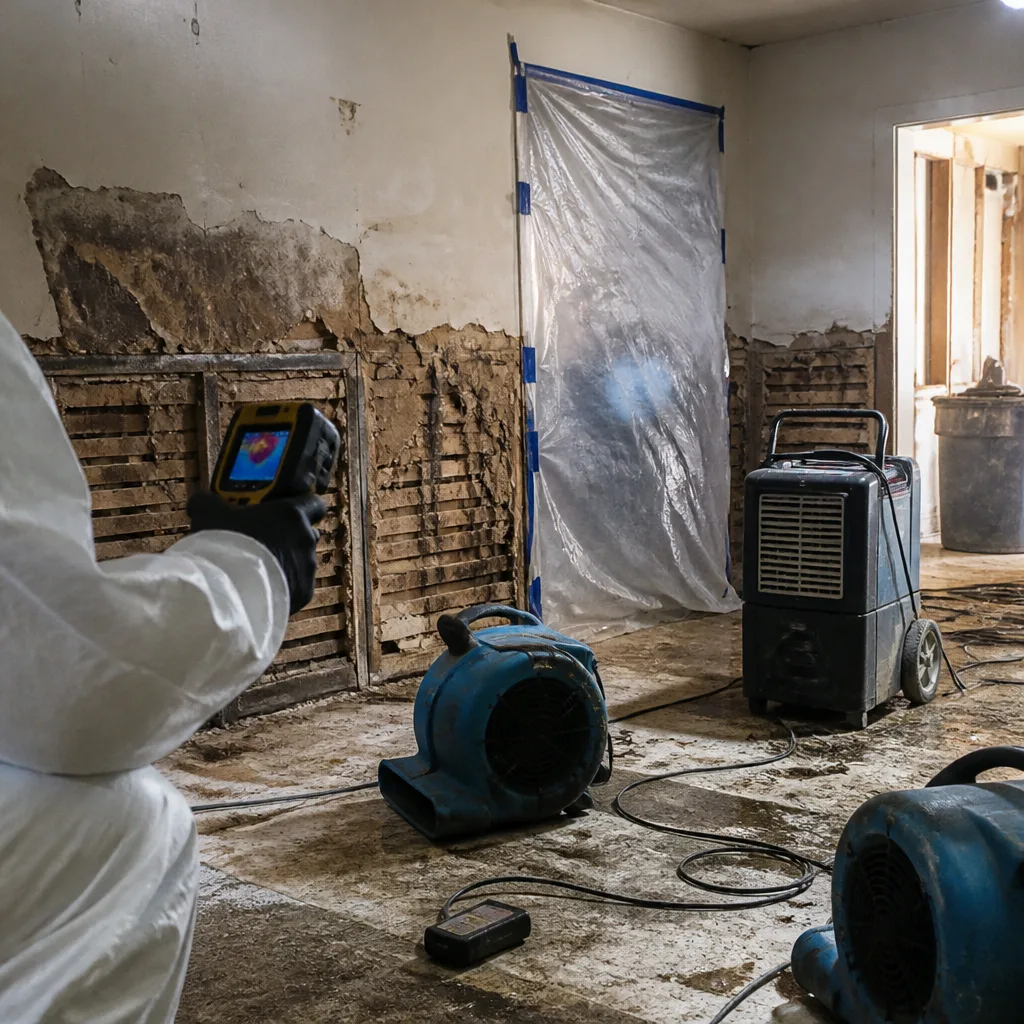
We arrive inside the window we gave you on the phone, inspect the affected area, map moisture levels in walls, floors, and ceilings using thermal imaging and pin-type moisture meters, and determine the water category and damage class. You get a written scope of loss from your home.
Step 2: Water Extraction
Standing water is removed with truck-mounted or portable extraction equipment. The faster this happens, the faster structural drying begins, and the less material has to be removed.
Step 3: Structural Drying
Air movers and dehumidifiers from Dri-Eaz, Phoenix, XPOWER, and B-Air are placed based on psychrometric measurements of the environment. Equipment runs continuously, and we monitor daily moisture readings until structural materials reach dry standard.
Step 4: Tear-Out and Demo
Any porous material that cannot be dried to standard comes out: wet drywall, saturated baseboards, ruined carpet and pad, damaged insulation. In Basement Water Removal and other Jacksonville jobs, two-foot flood cuts are the norm, not the exception. This prevents mold and speeds the rebuild.
Step 5: Sanitizing and Antimicrobial Treatment
Affected surfaces are cleaned and treated to inhibit microbial growth. Category 2 and Category 3 water require additional containment and sanitizing agents applied to industry standards.
Step 6: Rebuild and Restoration
New drywall goes in, joints are finished, trim goes back up, paint matches, flooring is installed. The work is completed to a written standard, and every repair is backed by the 365-Day Done Right Promise. If it fails within one year, we return and make it right at no charge. That’s in writing, on every job.
We document the full sequence for your insurance claim. Photos, readings, equipment logs, and the written scope: it all goes into a package formatted for the adjuster.
Jacksonville Water Damage Nightmares We See (and What They Cost to Fix)
Some specific situations come through our phones repeatedly in Jacksonville. These are the real-world scenarios that drive restoration costs, and they’re the ones you should know about before they happen to you:
- The upstairs toilet supply line in a Riverside bungalow: Water runs through the ceiling into the living room below. The cost isn’t just the bathroom; it’s ceiling drywall removal, floor drying, subfloor inspection, and potential electrical fixture replacement. $4,500 to $9,000 is realistic.
- The dishwasher line in a slab home in Mandarin: Water spills under the kitchen cabinets and finds the lowest point under the floor. Flooring comes up, cabinets may need removal to dry behind them, and the slab itself holds moisture that extends drying time. $3,500 to $7,000.
- The AC condensate line clog in July: Saturated drywall, wet carpet, and standing water around the air handler. This is a Category 1 event that becomes more serious if it’s been running while the homeowner was out of town. $2,000 to $5,000 depending on how much drywall and flooring was affected.
- The hurricane-driven roof leak in Atlantic Beach: Wind-driven rain works its way into the attic and then down the wall cavities. Category 3 water from storm intrusion. Full containment, deep drying, and possible roof tarping coordination. $6,000 to $15,000 depending on the scope.
- The water heater blowout in the garage in St. Johns County: A 50-gallon tank empties into the garage, then progresses into the adjacent laundry room and hallway. Sheetrock soaks from the bottom up. $2,500 to $6,000 including water heater replacement coordination.
These aren’t hypothetical ranges. They’re based on what we’ve seen across Duval and St. Johns counties, and they reflect the reality of Jacksonville construction, humidity, and labor costs in 2026.
When Should You Call a Restoration Company vs. a Plumber First?
If the water is still running, call the plumber first, or shut off the main valve yourself. There’s no point extracting water while the source is still feeding it. If the water is off and the damage is done, call a restoration company. The restoration company handles the drying, demolition, and rebuild. The plumber handles the repair to the source. Both are usually needed; the order matters.
On emergency plumbing calls, many Jacksonville homeowners assume the plumber will handle the whole job. Plumbers fix pipes. They don’t establish negative air pressure, run desiccant drying systems, or document moisture readings for insurance claims. That’s a restoration company’s trade. If your plumber offers to “leave some fans on it,” that’s your sign to call us.
How to Choose a Water Damage Restoration Company in Jacksonville
We’ll keep this brief, because the criteria are straightforward:
- Do they answer the phone? Water damage doesn’t respect business hours. A live person should pick up, not an answering service that takes a message for a call-back “within 24 to 48 hours.” We answer around the clock at (904) 664-5108.
- Do they put the price in writing before work begins? If a contractor starts work without a written scope and price, walk away. That’s the door where the price moves. At Keegan, the price you’re given before work starts is the price, always, per The Garrison Standard.
- Are their technicians background-checked and in uniform? You’re letting people into your home at a vulnerable moment. That matters. Our crews are background-checked, uniformed, and dispatched from a Jacksonville location.
- Do they work to recognized industry standards? The IICRC (Institute of Inspection, Cleaning and Restoration Certification), RIA (Restoration Industry Association), and IFA (International Fireproofing and Allied Trades) set the standards for water damage restoration. Our equipment and procedures are run to those standards, and our documentation format is built for insurance claims.
- What’s the follow-up? A contractor who disappears after the check clears is the worst-case scenario. Every Keegan job carries the 365-Day Done Right Promise. If the repair fails within one year, we return and make it right at no charge. No fine print, no proration.
Why Equipment Matters: The Numbers Behind the Dry-Out
Homeowners in Jacksonville often ask why professional restoration costs what it does. The equipment is a big part of it. A single commercial-grade desiccant dehumidifier from Dri-Eaz or Phoenix runs $3,000 to $8,000 to purchase. A truck-mounted extraction unit runs $25,000 to $50,000. A typical mid-size water damage job in a Jacksonville home deploys five to twelve pieces of equipment running continuously for four to seven days. The equipment cost is real, and it’s a fraction of what the damage costs if the drying is incomplete.
The other side of the equipment-cost equation: efficiency. Our desiccant drying setups remove moisture in days that consumer equipment would take weeks to address, if at all. In Jacksonville’s climate, that speed is the difference between a $3,000 dry-out and a $12,000 mold and rebuild job. You’re paying for the result, not the rental.
Shane Pruitt, who leads the Keegan Restoration Jacksonville team, has a simple rule: run the right equipment, monitor it daily, and don’t leave until the moisture readings hit the dry standard. That rule has kept Jacksonville homes out of the mold remediation cycle for years, and it’s the same rule baked into every written scope of loss we produce.
FAQs – Water Damage Restoration Cost
What is the average cost of water damage restoration in Jacksonville, FL?
The average cost runs $3,400 for a typical single-family home Water Damage Restoration Near Me in Jacksonville, FL. Smaller contained incidents start around $1,200, and large multi-room jobs with structural tear-out and rebuild range from $8,000 to $15,000. Call (904) 664-5108 for a free, written estimate specific to your home.
How much does water damage restoration cost per square foot in Jacksonville?
Extraction and drying alone cost $3.50 to $7.50 per square foot in the Jacksonville market. Full restoration including tear-out, drying, and rebuild runs $8 to $18 per square foot. The per-square-foot rate is useful for rough planning, but your actual written estimate will be based on the category of water, the class of damage, and the materials affected.
Does homeowners insurance cover water damage restoration in Jacksonville?
Sudden and accidental water damage, like a burst pipe or failed supply line, is covered by standard Florida HO-3 policies. Gradual leaks and flood damage from storms are typically excluded. In Jacksonville, where humidity and rainy-season storms are a regular part of life, our documentation is formatted to support your claim and give the adjuster a clear, professional record of the work.
How long does water damage restoration take in Jacksonville?
Most structural drying jobs take four to seven days in Jacksonville due to high ambient humidity. Extraction is usually complete in a few hours. Rebuild work adds one to three weeks depending on the scope. We’ll walk you through the timeline in writing before work begins, so you always know what to expect.
Is it cheaper to repair or replace water-damaged drywall?
In Jacksonville’s humidity, drying drywall in place usually is not a viable cost-saving option for saturated material. Wet drywall loses structural integrity and becomes a mold risk behind the baseboards. Replacing it at $2.75 to $5 per square foot is typically the lower total cost than drying it, treating it, and dealing with mold six months later.
Can you come today for water damage in Jacksonville?
Yes. A live person answers our phone 24 hours a day, 7 days a week, including nights, weekends, and holidays. Call (904) 664-5108 and we’ll schedule a same-day response for emergency water damage anywhere in the Jacksonville area, from the Beaches to Bartram Park to the Northside.
Get a Written Estimate for Water Damage Restoration in Jacksonville
If you’re standing in water or looking at a wet ceiling right now, call (904) 664-5108. A live person answers around the clock, not a phone tree. We’ll ask what happened, help you understand what you’re dealing with, and schedule a response inside the window we give you. The inspection is free, and the written price you receive before any work starts is the price. It doesn’t move at the door.
Every Keegan Restoration Jacksonville job is governed by The Garrison Standard: written pricing before work begins, background-checked uniformed technicians, professional-grade equipment run to IICRC, RIA, and IFA standards, and a full-year written guarantee on every repair through the 365-Day Done Right Promise. We’ve been part of the home of the Garrison Partners family since 2005, and the work shows it.
For more on how our team handles complete water damage restoration in Jacksonville, from extraction through rebuild, see our Water Damage Restoration in Jacksonville service page.
Written by Shane Pruitt, who leads the Keegan Restoration Jacksonville team. The pricing reflects the Jacksonville market as of 2026. Keegan Restoration Jacksonville offers free estimates, call (904) 664-5108.
What Our Customers Say
"Water heater burst in the garage and flooded the hall. Crew was there fast, in uniform, set up dehumidifiers and air movers, and ran drying logs every day. Veteran-owned and organized."
- Gail S."Quiet, focused crew. Everyone had a job and they did it."
- Alice M."Clear estimate in writing before they began. Final bill matched."
- Naomi T.