
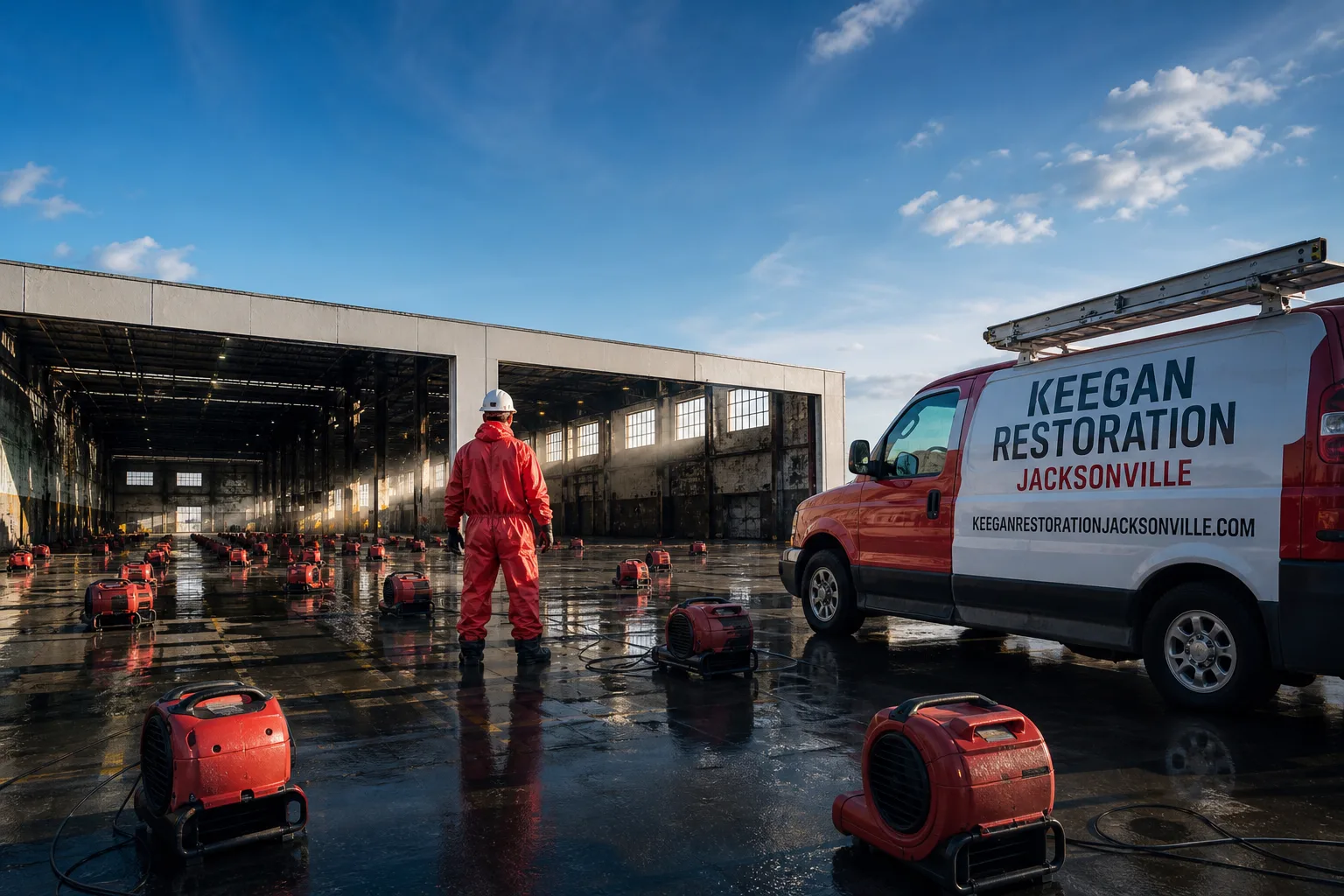
 Mold remediation
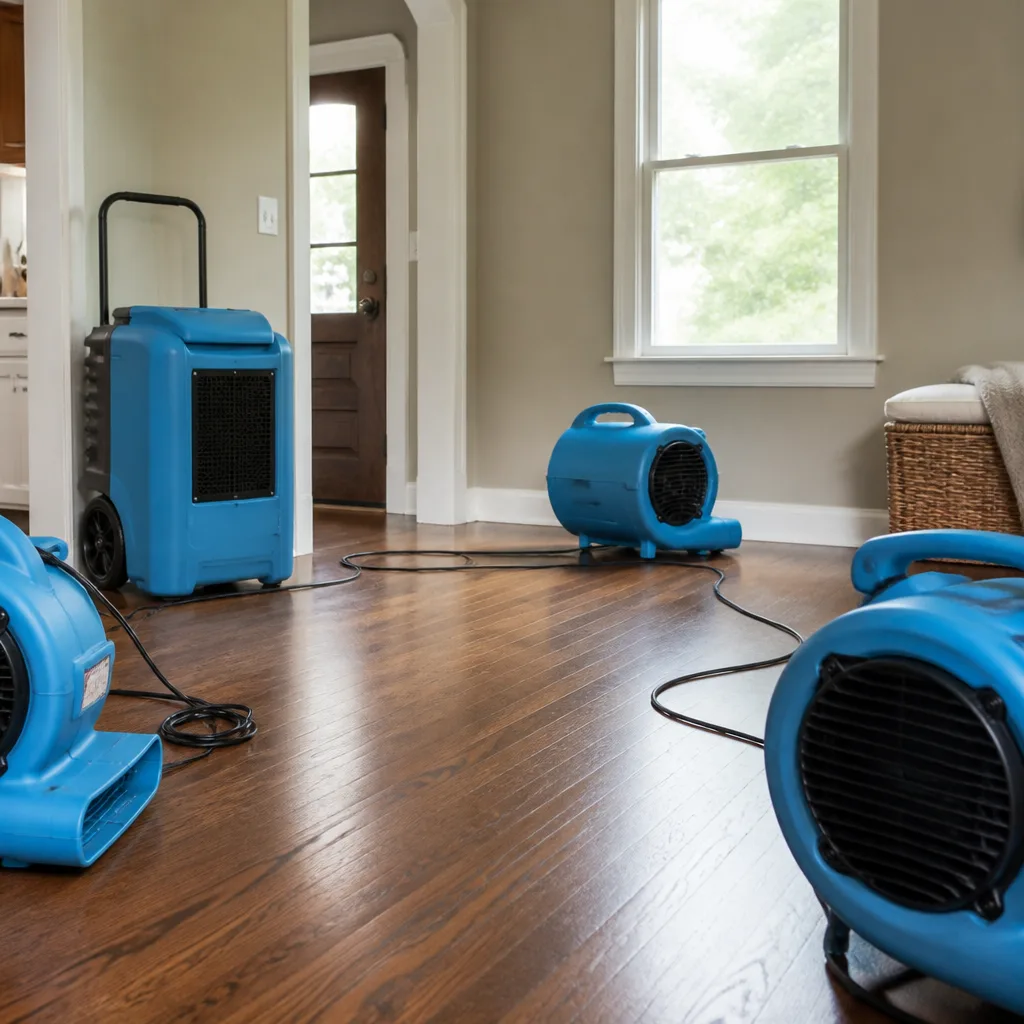 Water damage drying
 Fire & smoke cleanup
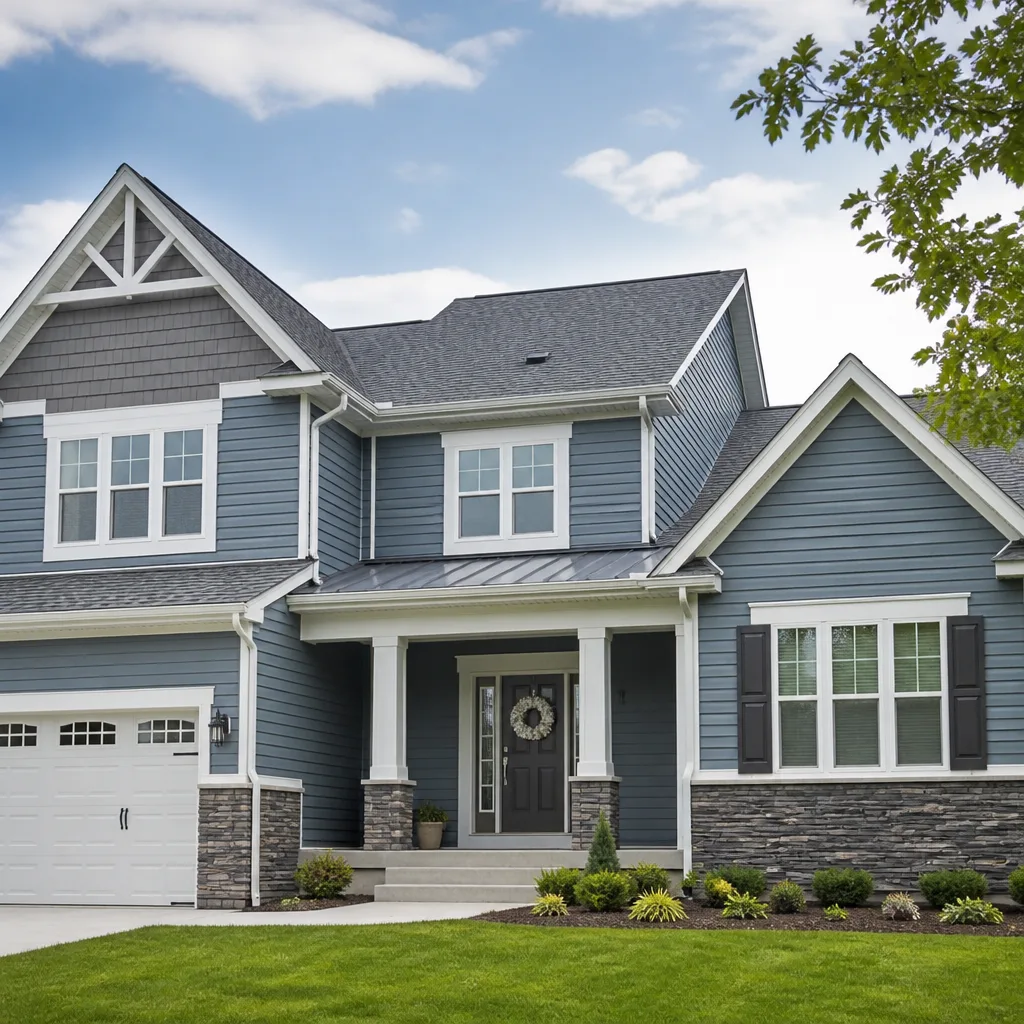 Storm response
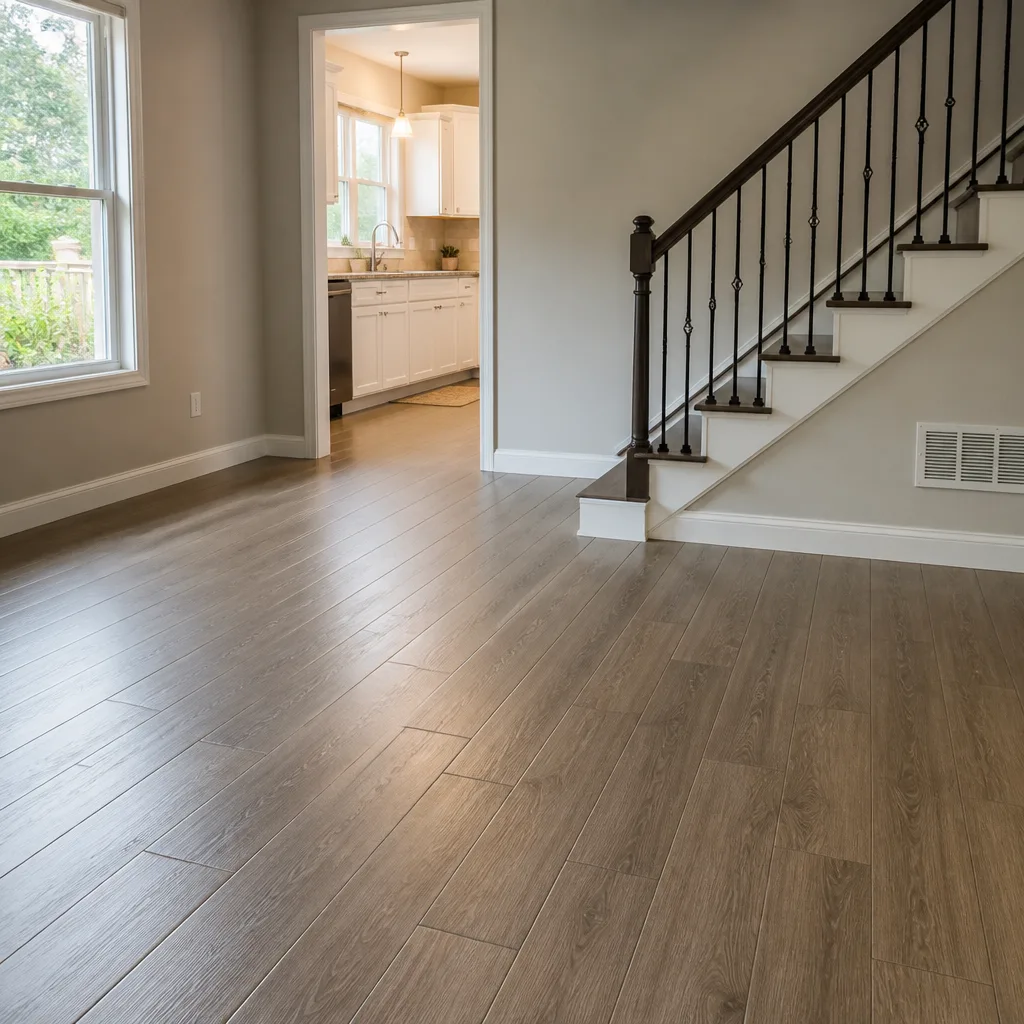 Sewage cleanup
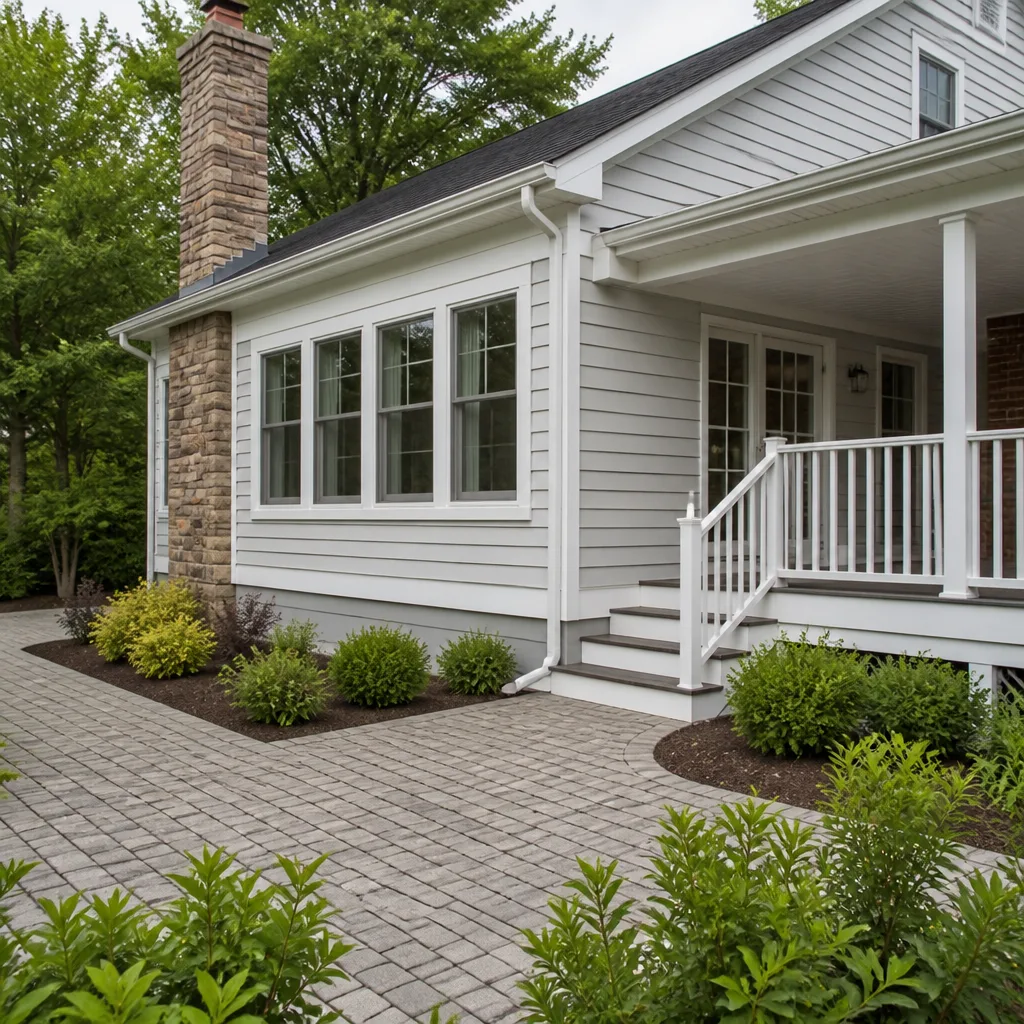 Reconstruction
Free visual inspection and a written scope of work before any mitigation begins - photos, moisture readings, and drying logs go in your claim file
The scope we write is the scope we bill. Anything new gets shown to you, in writing, before we touch it.
Get your free estimateFast, Reliable Mold Remediation Across Atlantic Beach
Mold remediation in Atlantic Beach typically costs between $1,800 and $6,500 depending on the size of the affected area, the category of water that caused it, and whether containment is required. Most Atlantic Beach jobs we handle are completed within three to five days. If you’ve found mold behind a baseboard, under a jalousie window, or in a flat-roof cavity, call (904) 664-5108 and we’ll get a technician to your door inside the window we give you.
We know Atlantic Beach homes because we work on them every week. Salt air, storm surge, corroded cast-iron plumbing, and original 1950s construction all combine to create mold problems that inland contractors simply don’t see. Our crews arrive with the right equipment from Dri-Eaz and Phoenix on the truck, and the price goes in writing before any work starts.
Why Keegan Restoration Jacksonville Is Atlantic Beach’s Preferred Mold Remediation Company
Atlantic Beach homeowners call us after other contractors have already failed them. We hear the same stories on Salt Run, around Donner Park, and over near the Mayport side: a crew showed up late, quoted one number, then tried to move it after the drywall came off. That doesn’t happen with us. The Garrison Standard runs every job: written price before work starts, background-checked uniformed technicians, and a 365-Day Done Right Promise that says if the work fails within a year, we return and fix it at no charge.
Shane Pruitt leads our crews, and he’s built the team around a simple rule from The Garrison Code: show up inside the window, price it in writing, do it by the book, leave the site clean, stand behind the work for a full year. Our Atlantic Beach customers have come to expect that level of discipline. A live person answers the phone at (904) 664-5108 every hour of the day, including weekends and holidays, because mold doesn’t wait for regular business hours.
We document every job with photo evidence and moisture readings formatted to support your insurance claim. If you’re working with an adjuster, we coordinate directly with them. That matters in Atlantic Beach, where Category 2 and Category 3 water events need to be classified correctly to get coverage approved.
Restoration work we handle
Black Mold Removal in Atlantic Beach
Black mold removal in Atlantic Beach homes starts with a real moisture investigation, because the mold you can see is rarely the whole story. We trace the water source first: corroded cast-iron supply lines, failed window seals, a flat roof that’s been leaking into a wall cavity, or a storm surge event that saturated porous 1950s block. Then we contain the area, remove the affected materials, and treat the surfaces with antimicrobials before rebuilding.
Atlantic Beach’s salt-heavy air makes black mold problems worse than they are inland. The persistent humidity keeps moisture readings above 60% in wall cavities and around original single-pane jalousie windows, which means mold that looks minor on the surface often extends much deeper. We’ve pulled drywall off Salt Run walls and found black mold running six feet past the visible stain, hidden behind vapor barriers that trapped moisture against the framing.
Containment and Source Correction
We set containment with negative air pressure before disturbing any mold-affected materials in your Atlantic Beach home. That keeps spores out of the rest of the house while we work. The source correction is just as important as the removal; if the leaking cast-iron run or roof penetration isn’t fixed, the mold comes back regardless of how thoroughly we remediate the surfaces.
What Gets Removed vs. What Gets Treated
Porous materials like drywall, insulation, and carpet pad usually come out in Atlantic Beach mold jobs. Non-porous surfaces like block walls, concrete slabs, and framing get wire-brushed, HEPA-vacuumed, and treated with antimicrobial solutions. The distinction matters because original 1950s plaster walls can sometimes be saved after Category 2 leaks, but Category 3 storm surge contamination typically requires tear-out to pre-loss condition.
Mold Removal Contractor in Atlantic Beach
Choosing a mold removal contractor in Atlantic Beach means asking whether they understand how salt air and storm surge change the job. We do. Our crews have remediated beach cottages on Ocean Boulevard, elevated piling homes near the Sanctuary, and slab-on-grade ranch houses in the neighborhoods west of Mayport Road. Each one presents different challenges: crawl space access under pilings, flat-roof cavities in older cottages, or slab leaks from corroded cast-iron plumbing that saturate flooring for weeks before anyone notices.
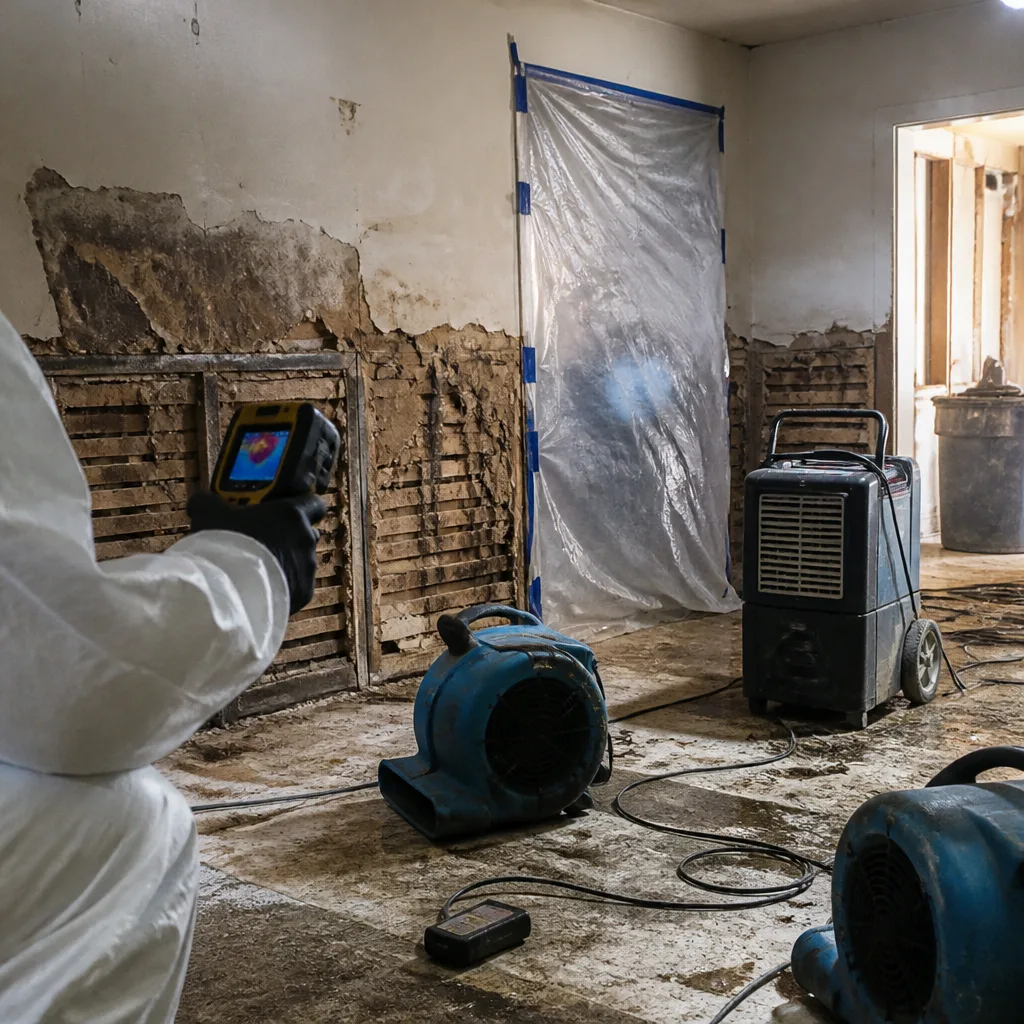
We run moisture mapping on every Atlantic Beach job before we touch a wall. That means we know exactly where the water went, not just where the mold is visible. A baseboard with 28% moisture reading tells us the slab is wicking water from a leaking pipe, and treating the baseboard alone would be the wrong job. Our scope of loss is written in plain English, line by line, with dollar figures, before any work begins.
Documentation and Insurance Coordination
Every Atlantic Beach remediation we perform is documented with photos, moisture logs, and drying records formatted for your insurance claim. We deal with adjusters directly, and we provide the documentation they need to verify the loss and approve the scope. Homeowners don’t have to translate what we did into insurance language; we already have it organized.
After the Remediation
We don’t just pull mold out and call it done. We address the conditions that caused it: raising ventilation in crawl spaces, sealing window frames, repairing roof penetrations, and replacing corroded plumbing runs with materials that can survive Atlantic Beach’s marine environment. Our crews rebuild with stainless hardware and marine-grade materials where coastal exposure demands it.
Trusted Brands We Service in Atlantic Beach
Our Atlantic Beach crews run professional-grade equipment from Dri-Eaz, Phoenix, and XPOWER, and our remediation protocols follow IFA industry standards. We service all major mold remediation equipment brands on site, which means Atlantic Beach homeowners don’t wait on parts shipped from a warehouse. When a dehumidifier or air scrubber needs a filter or a circuit board mid-job, our technicians handle it the same day and keep the project moving. That matters when you’re living out of a hotel room waiting for your house to be safe.
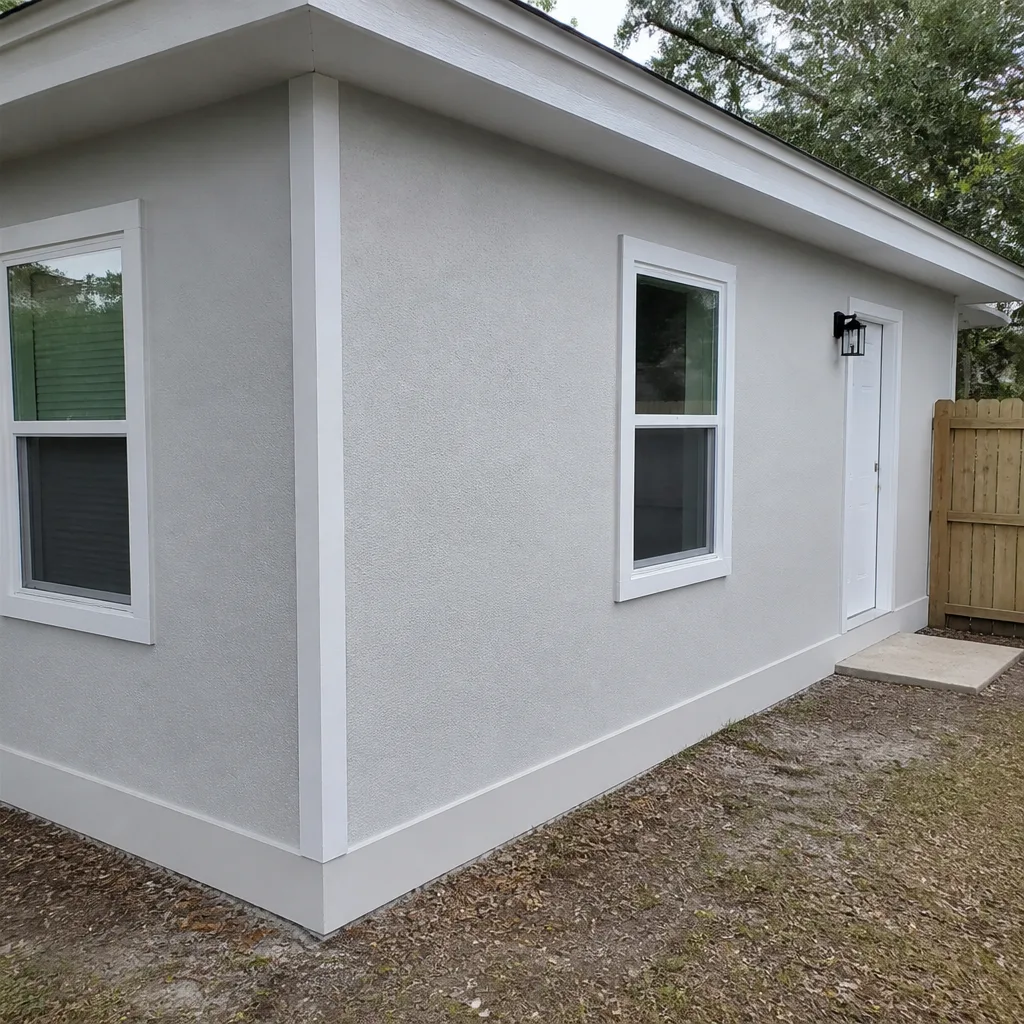
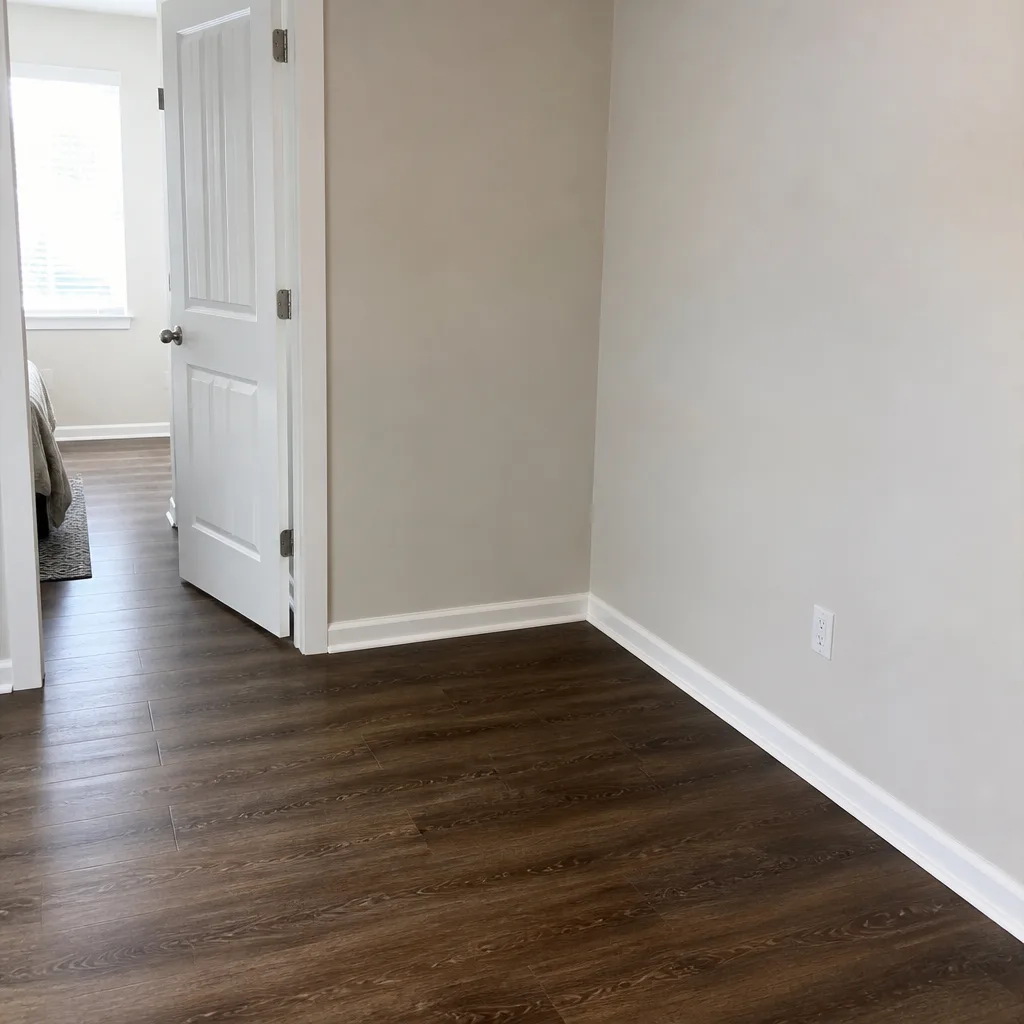
See the difference
 Before
 After
After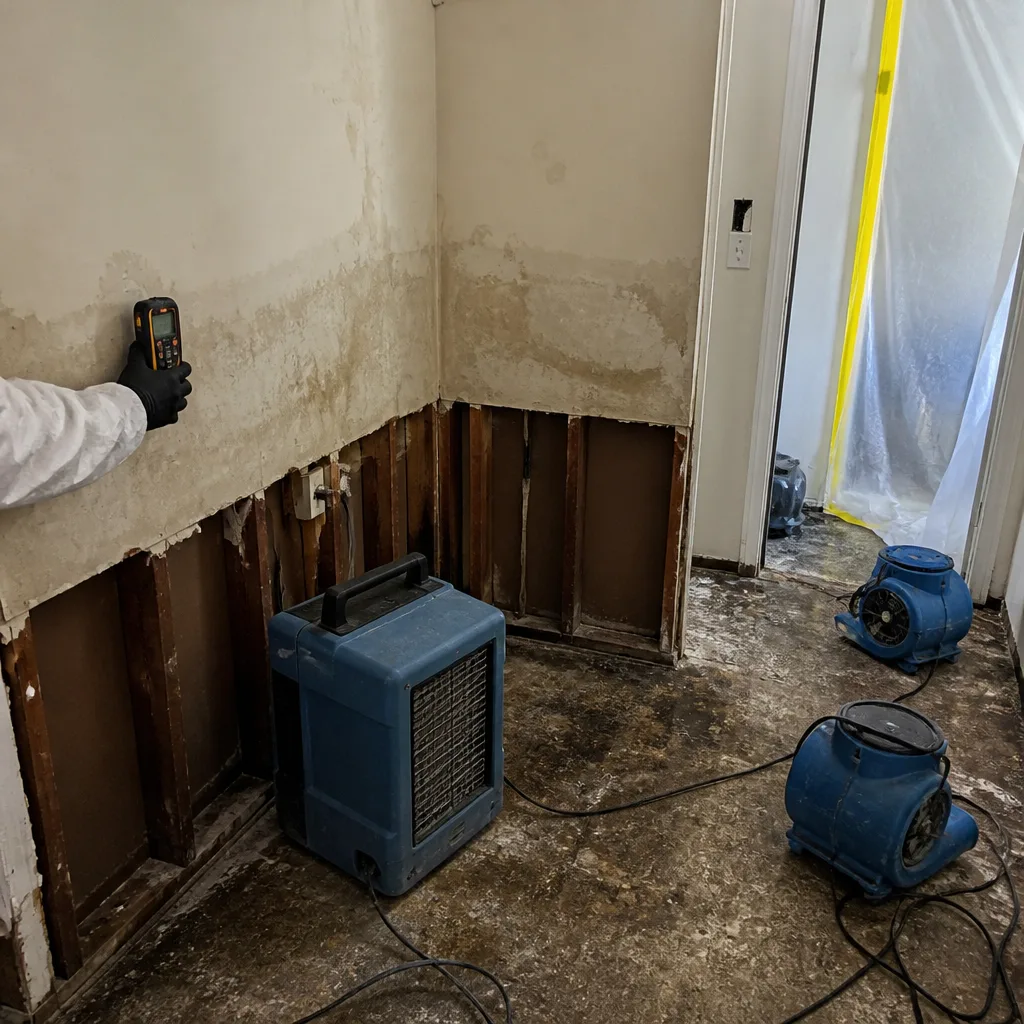 Before
 After
After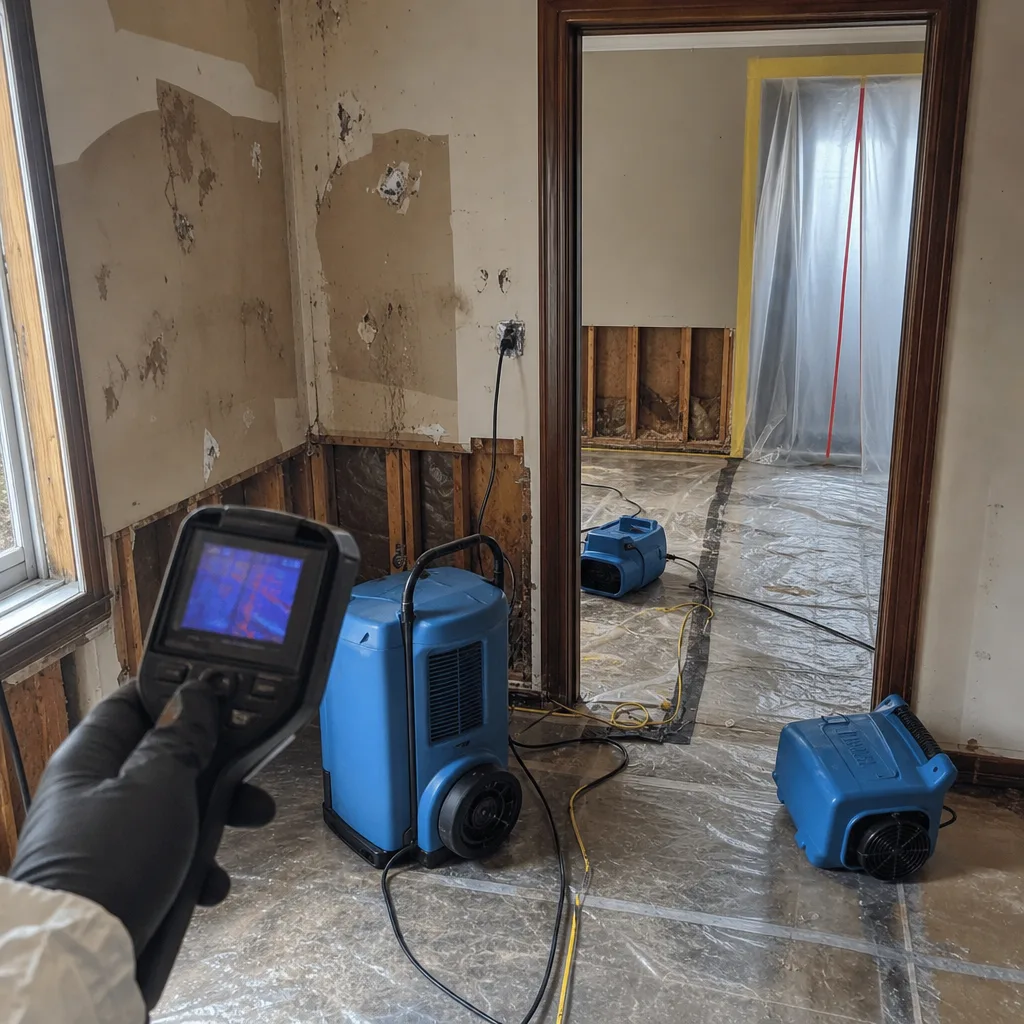 Before
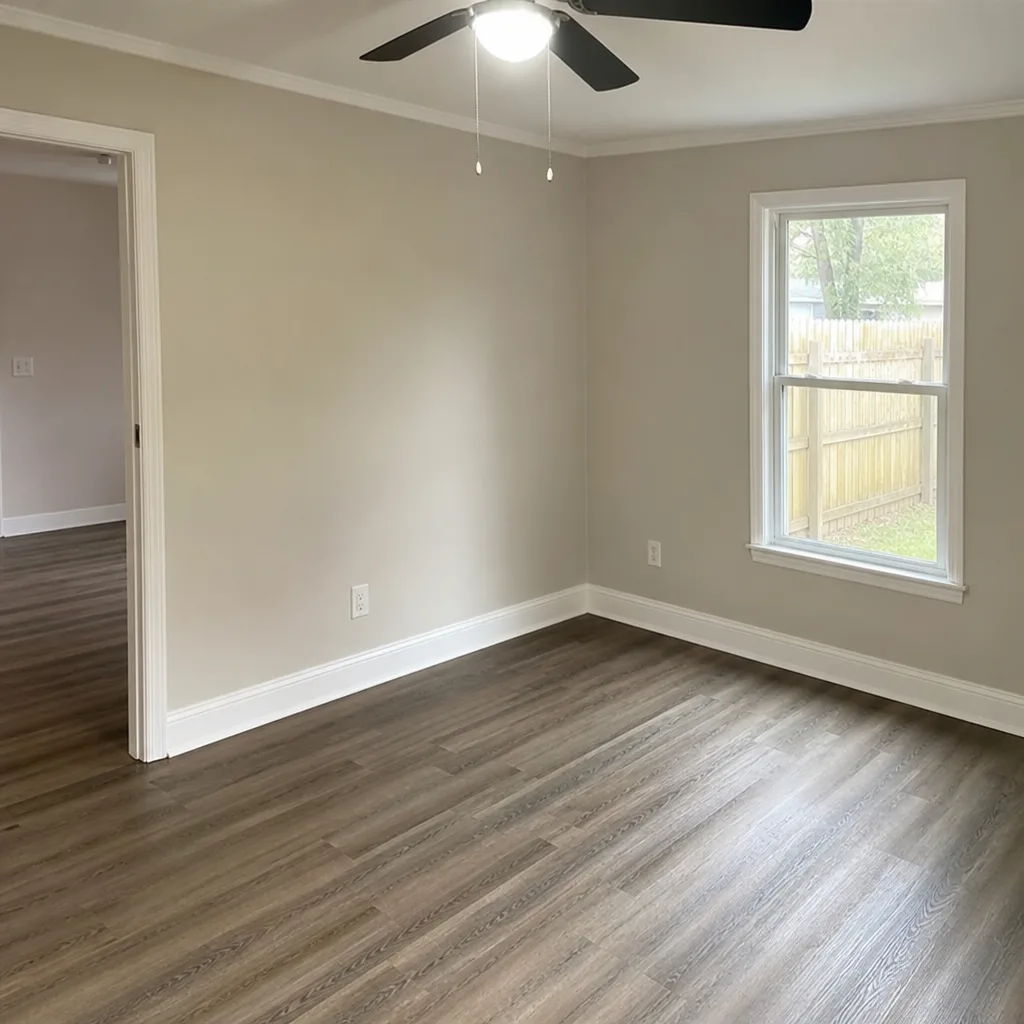 After
AfterCommon Mold Remediation Problems We See in Atlantic Beach Homes
- Mold hidden behind original jalousie windows. Salt air drives humidity above 60% in Atlantic Beach, and single-pane jalousie frames from the 1950s and 60s leak air constantly. Mold grows inside the wall cavity around these windows long before it shows on the interior drywall.
- Cast-iron slab leaks that go undetected for weeks. Original cast-iron supply lines in older Salt Run and Neptune Beach border homes corrode from the inside out. The first sign is usually buckling flooring or swelling baseboards; by then, mold has already taken hold in the subfloor and wall cavities.
- Category 3 contamination from king tide and nor’easter flooding. Storm surge in low-lying Atlantic Beach streets brings sewage-laced water into garages, crawl spaces, and ground floors. Porous block walls and slab insulation absorb that contaminated water, and treating it like a clean water leak spreads pathogens instead of removing them.
- Premature drying without structural verification. Contractors pull air movers and dehumidifiers after 48 hours and declare the job dry. In flat-roof Atlantic Beach cottages, hidden cavities stay above acceptable moisture levels and mold regrows within months. We keep drying logs and verify pre-loss moisture conditions before we leave.
Pricing for Mold Remediation in Atlantic Beach, FL
A typical mold remediation in Atlantic Beach runs $1,800 to $6,500. Here’s the honest breakdown: a contained bathroom or laundry room job with no rebuild runs $1,800 to $3,200. A full Category 2 slab leak remediation with drywall removal, antimicrobial treatment, and rebuild of a room or two lands between $3,500 and $6,500. Category 3 storm surge contamination, which requires full containment, pack-out, and structural drying, starts around $5,000 and goes up from there based on square footage. Crawl space treatments under elevated piling homes in Atlantic Beach typically run $2,500 to $4,800. The written quote we give you before work starts is the price you pay; it never moves at the door. Call (904) 664-5108 for a free estimate on your Atlantic Beach property.
We Also Serve Cities Near Atlantic Beach
Keegan Restoration Jacksonville provides Mold Remediation services throughout the Beaches area. Our crews regularly work in Neptune Beach, Jacksonville Beach, Ponte Vedra Beach, and Jacksonville. If your home is in Atlantic Beach or any surrounding community, the same written-price guarantee and 365-Day Done Right Promise apply. We know the coastal housing stock throughout this region and the mold problems that come with it.
Serving Atlantic Beach, FL - Our Local Coverage Area
We’re based in the Atlantic Beach area and know this community well. Use the map below to see our service coverage - if you’re nearby, we can almost certainly help.
FAQs About Mold Remediation in Atlantic Beach
Salt air keeps relative humidity in Atlantic Beach wall cavities consistently above 60%, which means mold colonies grow faster and extend deeper into building materials than they do in inland Jacksonville. Remediation in Atlantic Beach requires more aggressive moisture removal, longer drying times, and more thorough source correction because the marine environment constantly reintroduces moisture into corroded window frames, fasteners, and plumbing runs. We account for that in every Atlantic Beach scope of work, and our drying protocols are adjusted for coastal humidity levels. If you’ve seen mold in an Atlantic Beach home, call (904) 664-5108 and we’ll assess the full extent of the problem.
Category 3 water contains sewage and pathogens, which means any porous material it touches in an Atlantic Beach home must be removed and disposed of under containment, not treated and salvaged. Category 1 pipe leaks, when caught early, allow for extraction and antimicrobial treatment that can save original plaster walls and wood framing. Storm surge from nor’easters and king tides pushes Category 3 water into garages, crawl spaces, and ground floors throughout Atlantic Beach, and treating that water like a clean leak leaves dangerous contamination behind. Call (904) 664-5108 if your Atlantic Beach property took on flood water, and we’ll classify the water correctly before any remediation begins.
Mold can begin growing in an Atlantic Beach home within 48 to 72 hours after a cast-iron slab leak saturates the subfloor, especially in our coastal humidity. The problem is that these leaks often go undetected for weeks because the water travels through the slab and up into baseboards and flooring before any visible damp spot appears. By the time buckling oak flooring shows up in a Salt Run living room, mold has typically colonized the subfloor, the bottom plates, and the wall cavities. If you suspect a slab leak, call (904) 664-5108 and we’ll map the moisture and find the source.
Yes, elevated piling homes in Atlantic Beach require sealing the underside of the structure during containment, because the open floor system allows air movement that can spread spores into the living space above and into neighboring units on narrow beach lots. We install containment sheeting beneath the subfloor and run negative air pressure through the affected area to keep mold from circulating. Crawl space and piling access in Atlantic Beach is often tight and shaded, which means we run desiccant drying equipment longer than we would in a conditioned interior space. Our crews are set up for this; call (904) 664-5108 for an assessment.
Often yes, if we get to the job before the moisture has been present for more than a couple of weeks. Category 2 water from a cast-iron supply line leak is contaminated but not sewage-laden, and original plaster walls from Atlantic Beach’s 1950s construction era are dense enough that surface cleaning, wire-brushing, and antimicrobial treatment can preserve them. The key is extracting water quickly with Dri-Eaz equipment and verifying structural dryness with moisture logs before rebuilding. Call (904) 664-5108 and we’ll tell you whether your plaster walls can be saved or need to come out.
On a canal-front block in Salt Run, our crew remediated a 1962 beach cottage where pinhole leaks in original cast-iron supply lines had saturated the slab for weeks. Moisture mapping showed 28% readings in the baseboards and buckling oak flooring throughout the main living area. We set containment, pulled Category 2 water from the wall cavities with Dri-Eaz extractors, and after stripping the corroded plumbing runs, applied antimicrobial treatment before rebuilding with stainless hardware and marine-grade drywall to survive the next storm surge. That is the discipline every Atlantic Beach home deserves.
The distinction between Category 2 grey water from corroded cast-iron slab leaks and Category 3 black water from storm surge defines how we approach every Atlantic Beach job. Grey water from a leaking supply line can be extracted and treated, and original 1950s plaster walls can often be salvaged with wire-brush remediation and antimicrobial application. Black water from king tide flooding and nor’easter surge carries sewage and pathogens through low-lying streets, saturating porous block walls, and that requires full containment, pack-out, and tear-out of every porous surface to pre-loss condition. Getting that classification right changes everything about cost, coverage, and whether your home is actually safe afterward. Atlantic Beach homeowners need a contractor who understands that difference, not one who treats every water event the same way.
Salt air is the constant variable here. It corrodes window fasteners, plumbing runs, structural connectors, and HVAC components years faster than inland exposure. That corrosion is what triggers the hidden leaks that lead to mold in Atlantic Beach homes. Older original 1950s to 70s beach cottages with cast-iron supply lines, single-pane jalousie windows, and flat roofs are the most vulnerable. Newer elevated homes near the oceanfront deal with under-structure humidity and storm surge exposure instead. Both require a mold remediation plan that accounts for the marine environment before, during, and after the job. Our crews build that coastal awareness into every scope of work.
Written by Shane Pruitt, Owner at Keegan Restoration Jacksonville, serving Atlantic Beach and the Beaches area.
Call (904) 664-5108 for a free estimate on mold remediation in your Atlantic Beach home. A live person answers. The price goes in writing before we touch anything. And every repair is backed by the 365-Day Done Right Promise.